
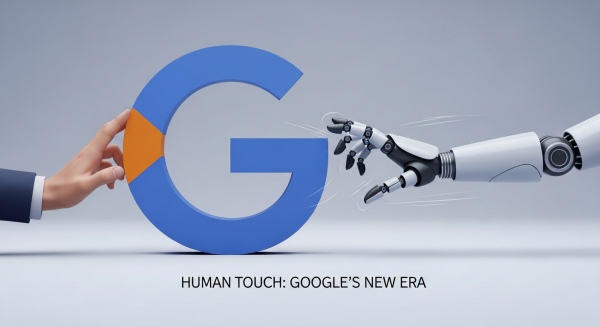
Beyond the AI Hype: Why Google’s Latest Update Demands a Human Touch
If you’ve felt a tremor in your website traffic recently, you’re not alone. The digital landscape just experienced a significant shift, and it has everything to do with the content you publish. In early 2024, Google rolled out one of its most impactful core updates yet, aimed squarely at a problem that has been growing exponentially: the flood of low-quality, unhelpful, and often AI-generated content clogging up search results.
For small business owners, this news might sound alarming. You might be wondering if your site is at risk, if using AI for your marketing is now off-limits, or how you can possibly keep up. But here’s the good news: this change is actually a massive opportunity for authentic businesses to shine. Google isn’t punishing technology; it’s rewarding humanity. This update is a clear signal that the future of SEO belongs to those who prioritize creating genuinely helpful, people-first content. Let’s break down what that means for you and how you can adapt your strategy to thrive in this new environment.
What is Google’s “Helpful Content” Update (And Why It Just Got More Serious)?
For years, Google has been on a mission to better understand and rank content based on its quality and relevance to the user. The “Helpful Content System” was introduced as a specific signal to identify content that seemed created primarily to rank in search engines rather than to help or inform people. Think of thin, generic articles that repeat the same information you’ve seen on ten other sites without adding any real value.
However, the recent March 2024 Core Update took this to a whole new level. Instead of being a separate signal, the helpful content system is now a core part of the main ranking algorithm. This is a crucial distinction. It’s no longer just one factor among many; it’s fundamental to how Google evaluates your entire website. In their own announcement, Google stated the goal was to reduce low-quality, unoriginal content in search results by 40%. That’s a seismic shift.
So, what does Google consider “unhelpful”? It’s content that leaves a reader feeling unsatisfied. Maybe it promised an answer but didn’t deliver, lacked any real expertise, or was so generic it felt like it was written by a robot—because, in many cases, it was.
The AI Content Trap: Where Many Businesses Went Wrong
The rise of powerful AI tools created a gold rush. Suddenly, it was possible to generate hundreds of articles, blog posts, and product descriptions in a fraction of the time it would take a human writer. Many businesses and so-called SEO gurus jumped on this, believing that more content, produced faster, was the key to ranking success. They started creating content “at scale,” flooding the internet with articles that were technically readable but practically useless.
This is the exact type of behavior Google is now targeting. The algorithm has become much more sophisticated at identifying content that lacks a human touch—content that shows no real experience, unique insight, or genuine expertise. The mistake wasn’t in using AI, but in using it as a replacement for human knowledge and effort.
Think of AI as a brilliant but inexperienced intern. It can research, outline, and even draft ideas with incredible speed. But it can’t draw on your years of experience running your business, share a personal story about helping a customer solve a specific problem, or offer a unique perspective that no one else has. Relying on AI to be the author, not the assistant, is the trap. Our approach to AI Automations for Small Business focuses on using these powerful tools to enhance human capability, not replace it, ensuring your content remains authentic and valuable.
E-E-A-T: Your Secret Weapon for Winning in 2024
If you want to understand what Google values, you need to know about E-E-A-T. This acronym stands for Experience, Expertise, Authoritativeness, and Trustworthiness. It’s not a direct ranking factor but a framework Google’s quality raters use to evaluate search results, and its principles are baked into the core algorithm. In the wake of the helpful content update, focusing on E-E-A-T is no longer optional; it’s your primary strategy.
Experience
This is the newest addition to the framework, and it’s a direct response to generic AI content. Google wants to see that the author has real, first-hand life experience with the topic. If you’re a plumber writing about fixing leaky pipes, share a story from a tricky job. If you’re a financial advisor discussing retirement planning, include insights from your years of helping clients. Don’t just tell the reader what to do; show them you’ve done it.
Expertise
This is about demonstrating your deep knowledge of your field. Are you a recognized expert? Do you have qualifications, credentials, or a proven track record? Your content should reflect this. Go beyond surface-level tips and create comprehensive guides, in-depth analyses, and tutorials that truly solve a problem for your reader. This is a core tenet of any effective SEO & Content Strategy.
Authoritativeness
Authoritativeness is about your reputation. Are you and your website seen as a go-to source of information in your industry? This is built over time through mentions from other respected sites, positive reviews, and creating a library of high-quality content that others want to reference. A great way to learn more about building this authority is through Moz’s excellent guide on the topic, which provides a deep dive into becoming a recognized leader in your niche.
Trustworthiness
Trust is the foundation of any business relationship, both online and off. On your website, this translates to security (having an HTTPS site), transparency (clear contact information and author bios), and social proof (testimonials, reviews, and case studies). A reader needs to feel confident that the information you’re providing is accurate and that your business is legitimate and reliable.
Actionable Steps to Create “People-First” Content That Google Loves
Understanding the theory is great, but how do you put it into practice? Shifting your focus to “people-first” content is about changing your mindset from “What keywords do I need to rank for?” to “What does my ideal customer need to know?” Here are concrete steps you can take today to align your content with the helpful content update.
- Answer Questions Thoroughly: Your goal should be to create the best, most comprehensive resource on the internet for a given query. When a user lands on your page, they should feel like they’ve found the definitive answer and don’t need to click back to Google. This is what search professionals mean when they talk about satisfying “search intent.”
- Showcase Your Unique Experience: Inject your personality and real-world experience into your content. Use “I” and “we.” Tell stories. Share case studies of client successes (and even failures you learned from). This is your unique value proposition—something no AI can replicate.
- Write for a Human, Not an Algorithm: Forget about keyword density and other outdated SEO tricks. Write naturally. Use a conversational tone. Break up long paragraphs, use headings, and include images to make your content easy and enjoyable to read. A great user experience is a powerful ranking signal.
- Audit and Improve Your Existing Content: You don’t necessarily need to create a ton of new content. Go back through your existing blog posts and pages. Can you update them with new information? Can you add a personal anecdote or a case study to demonstrate “Experience”? Pruning or improving old, unhelpful content can send a strong positive signal to Google.
- Use AI as a Smart Assistant: Don’t abandon AI altogether. Use it to brainstorm topics, create outlines, suggest headlines, or check your grammar. Use it as a tool to make your human-led content creation process more efficient, freeing you up to focus on the high-value tasks of adding unique insights and expertise.
The Future is Human-Centric (With a Little AI Help)
The panic surrounding Google’s March 2024 Core Update is understandable, but for quality businesses, it should be seen as a course correction. As many industry experts have noted, the update clears out the noise, making it easier for truly valuable content to reach the people who need it. Google is rewarding authenticity.
This shift forces us to return to the fundamentals of good business and marketing: understanding your customer, serving their needs, and building a relationship based on trust. Your website is the primary vehicle for this relationship. A professional, user-friendly site is the foundation upon which all great content is built. Our approach to Website Design Services is centered on creating this exact foundation—a platform designed not just to look good, but to connect with your audience and showcase your expertise effectively.
Ultimately, the algorithm is simply trying to emulate what a human would find helpful and satisfying. If you focus on creating content that genuinely serves your audience, you’ll not only be aligning with Google’s guidelines but also building a more sustainable and successful business in the long run.
In the end, the key takeaway from the latest helpful content update is simple: be more human. Tell your story, share your knowledge, and focus on providing real value. When you prioritize your audience above all else, you create a powerful strategy that is not only resilient to algorithm changes but is also the very best way to attract and retain loyal customers.
If you’re unsure how to navigate these changes or want to ensure your website is built for long-term success, our team is here to help. Book a free, no-obligation consultation with us today, and let’s build a content strategy that Google and your customers will love.