Skip to content
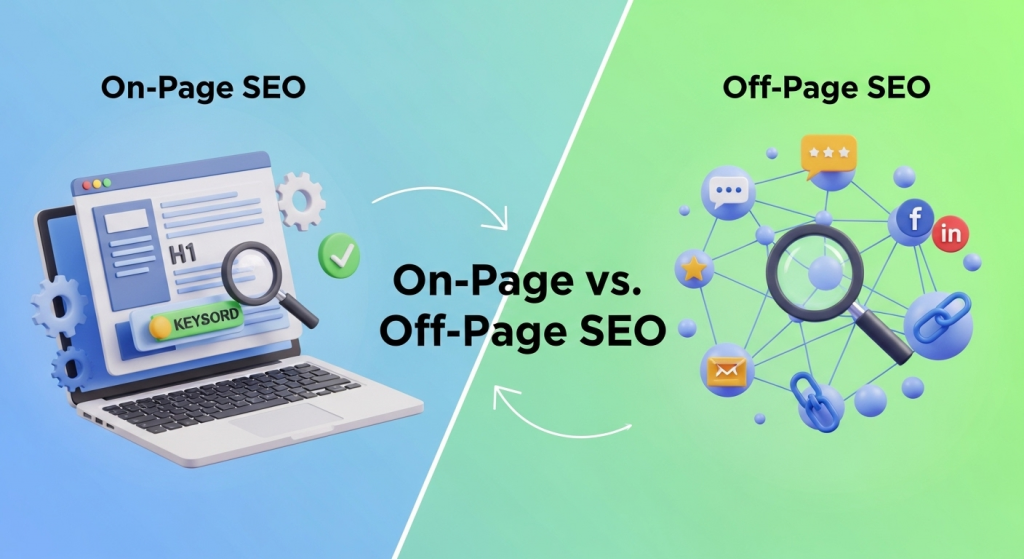 The Difference Between On-Page and Off-Page SEO (and Why Both Matter) As a small business owner, you know how important it is for customers to find you. In today’s digital world, that means showing up on Google. Search Engine Optimization, or SEO, is the key to making that happen. But SEO isn’t just one single task; it’s a comprehensive strategy with two critical halves: on-page SEO and off-page SEO. Understanding the difference—and how they work together—is your first step toward dominating search results and driving real growth. Think of it like building a fantastic new restaurant. On-page SEO is everything you do inside: crafting the perfect menu, creating a welcoming atmosphere, and ensuring your staff gives great service. Off-page SEO is everything you do outside to build your reputation: getting rave reviews in the local paper, being recommended by food bloggers, and earning a reputation as the best spot in town. You need both to thrive, and the same is true for your website. What is On-Page SEO? The Foundation of Your Website On-page SEO includes all the measures you take directly on your website to improve its position in search rankings. It’s about making your website clear, trustworthy, and valuable to both search engines and human visitors. When Google’s crawlers analyze your site, they are looking for signals that tell them what your content is about and whether it’s a high-quality result to show users. On-page SEO is how you provide those signals. This is the foundational work. Without a solid on-page strategy, any off-page efforts you make will be far less effective. You can’t build a great reputation on a poorly built website. Key Elements of On-Page SEO Optimizing your on-page SEO involves several core components that work together to create a seamless experience. Here are the most important ones for any small business: High-Quality Content: This is the heart of on-page SEO. Your content—from blog posts to service pages—must be original, informative, and relevant to what your audience is searching for. It should answer their questions, solve their problems, and establish you as an expert in your field. Keyword Optimization: Keywords are the terms people type into Google. By strategically including these terms in your content, headers, and titles, you help Google understand what each page is about. The key is to do this naturally, not “stuff” them in where they don’t belong. Title Tags and Meta Descriptions: Your title tag is the clickable headline that appears in search results, and the meta description is the short summary underneath. Compelling, clear, and keyword-rich titles and descriptions can dramatically improve your click-through rate. Clear Site Structure & Headings: Using headings (like H1, H2, H3) to structure your content makes it easier for visitors to read and for search engines to understand the hierarchy of your information. A logical structure is a win for both users and SEO. Website Performance: How fast your site loads and whether it works well on mobile devices are massive ranking factors. A slow, clunky site frustrates users and sends negative signals to Google. A professional Website Design Service ensures your site is built for both speed and mobile-friendliness from the ground up. Internal Linking: Linking to other relevant pages on your own website helps guide users to more useful information and allows search engines to discover more of your content. It also helps spread authority throughout your site. What is Off-Page SEO? Building Authority and Trust Off-page SEO refers to all the actions you take outside of your website to impact your search engine rankings. While on-page SEO is about what your site says about itself, off-page SEO is about what the rest of the internet says about your site. It’s how you build credibility, authority, and trust. Search engines like Google want to recommend the most trustworthy and reputable sources. Off-page signals are the primary way they measure this. A site with a strong off-page profile is seen as a more reliable and authoritative resource, leading to higher rankings. Key Elements of Off-Page SEO Building a strong reputation online involves a variety of tactics. For small businesses, these are the most impactful: Backlinks: This is the cornerstone of off-page SEO. A backlink is a link from another website to yours. As explained in this comprehensive guide from Moz, search engines view high-quality backlinks as votes of confidence. When an authoritative site links to you, it signals that your content is valuable and trustworthy. Local SEO: For businesses serving a specific geographic area, local SEO is non-negotiable. This involves optimizing your Google Business Profile, gathering customer reviews, and ensuring your business name, address, and phone number are consistent across local online directories. Social Media Marketing: While links from social media posts don’t carry the same weight as a traditional backlink, a strong social media presence drives traffic, builds brand awareness, and can lead to others discovering and linking to your content. Brand Mentions: Even when another website mentions your brand name without linking to you, search engines can pick up on these signals. Consistent brand mentions across the web help establish your business as a legitimate entity. On-Page vs. Off-Page SEO: A Team Effort It’s clear that this isn’t an “either/or” situation. The most successful digital marketing strategies integrate both on-page and off-page SEO. They are two sides of the same coin, and one cannot reach its full potential without the other. You can have the most perfectly optimized website in the world (great on-page SEO), but without any backlinks or authority signals (off-page SEO), Google may not see it as credible enough to rank on the first page. Conversely, you could have amazing backlinks pointing to your site, but if the site itself is slow, poorly written, and confusing, visitors will leave immediately, and Google will take notice. A strong SEO Strategy starts with a solid on-page foundation and then uses off-page techniques to build authority and amplify its reach. For a complete overview of best practices, Google’s own SEO Starter
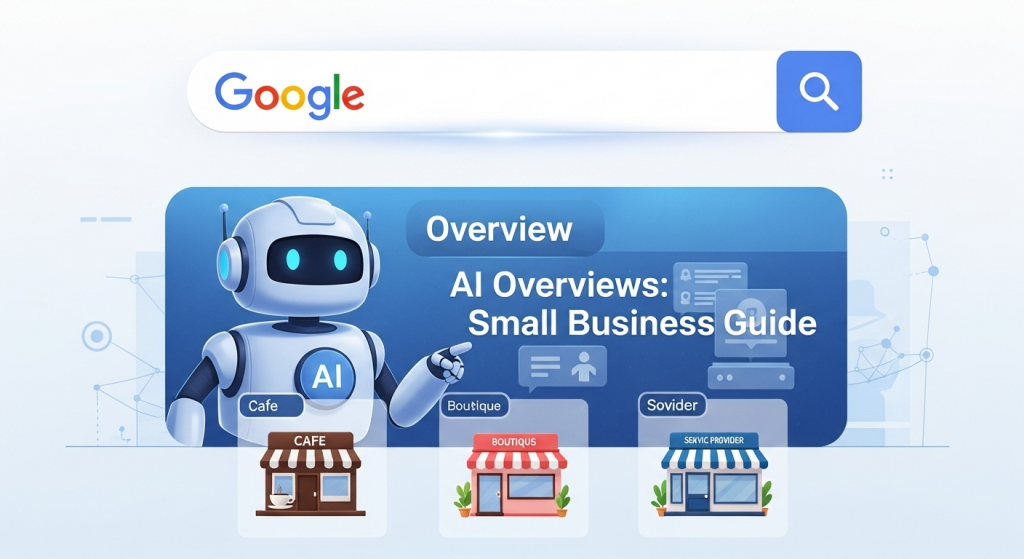 Google’s New AI Overviews Are Live: What Small Businesses Need to Do Right Now The way your customers find you online just underwent a massive change. In a move that has been anticipated and tested for over a year, Google has officially started rolling out “AI Overviews” to its main search results pages for users in the US, with a global expansion planned. This isn’t just a minor tweak; it’s a fundamental shift in how search works, and it has significant implications for your small business’s website traffic and digital marketing strategy. If you’ve noticed a new, AI-generated summary box at the very top of your Google searches, you’ve seen it in action. But what does it mean for your online visibility when Google starts answering questions directly? Don’t panic. This change brings both challenges and new opportunities. Let’s break down exactly what AI Overviews are, how they will affect your business, and the concrete steps you can take to adapt and thrive in this new search landscape. What Exactly Are Google’s AI Overviews? Think of AI Overviews as a super-smart research assistant built directly into Google. Instead of just giving you a list of ten blue links and leaving the work to you, Google now uses generative AI to analyze the top results, synthesize the information, and present a concise, conversational summary at the top of the page. This AI-powered answer aims to directly address the user’s query, often pulling in information from multiple websites to create a comprehensive overview. According to Google’s official announcement, this feature is designed to help people with more complex questions, allowing them to get a quick snapshot of information without having to piece it together from various sources. The AI Overview includes links to the websites it used as sources, but they are presented within the text, not as the primary result. This fundamental difference is why business owners are paying close attention. How Will This Impact Your Small Business? The immediate concern for any business owner is straightforward: if Google answers the user’s question directly, will they still need to click through to my website? This is the central question that will define the next chapter of search engine optimization (SEO). The impact can be viewed as both a challenge and a significant opportunity. The Challenge: A Potential Dip in Website Traffic The most discussed risk is the rise of “zero-click searches.” For simple, informational queries where a user just needs a quick fact, the AI Overview might provide a complete answer. This could mean fewer clicks for articles, blog posts, and FAQs that have historically ranked at the top for these terms. If your current digital marketing strategy relies heavily on capturing traffic from broad, top-of-funnel questions, you might see a decline in visitors. The coveted “number one spot” no longer guarantees the most clicks if it sits below a comprehensive AI summary. The Opportunity: Becoming a Trusted Source On the flip side, this is a golden opportunity to establish your business as a leading authority. AI Overviews don’t create information out of thin air; they source it from credible, high-quality websites. If your website is one of the sources cited in an AI Overview, it’s a powerful signal of trust and authority to both Google and potential customers. Your brand gets featured at the very top of the search results, directly inside the answer. This can significantly boost brand recognition and position you as an expert in your field, even if it doesn’t result in a direct click every time. Your New Action Plan: How to Adapt Your SEO Strategy This isn’t the time to abandon your digital marketing efforts. It’s time to refine them. The core principles of good SEO are more important than ever. Here’s a four-step action plan to adapt your SEO strategy for the age of AI Overviews. 1. Double Down on High-Quality, People-First Content Generic, surface-level content will no longer cut it. Google’s algorithms, now supercharged with AI, are better than ever at identifying genuinely helpful, insightful, and well-researched information. Your goal should be to create the best possible resource on a given topic. Go beyond basic blog posts and think about creating comprehensive guides, original case studies, detailed tutorials, and in-depth articles that showcase your unique perspective and expertise. A powerful SEO & Content Strategy is no longer just about keywords; it’s about providing undeniable value that AI will want to reference. 2. Target Long-Tail and Conversational Questions As users get more comfortable with AI, they will start asking search engines more complex, conversational questions. Instead of searching for “plumber,” they might ask, “what’s the best way to fix a leaky faucet under the kitchen sink without calling a plumber?” Your content needs to answer these specific, long-tail questions. You can find these by: Using keyword research tools to find question-based queries. Looking at the “People Also Ask” section in Google search results. Thinking about the real-world problems your customers face and creating content that solves them step-by-step. 3. Prioritize E-E-A-T (Experience, Expertise, Authoritativeness, Trustworthiness) E-E-A-T is Google’s framework for measuring content quality, and it’s a critical factor for being featured in AI Overviews. You need to prove to Google that your content is reliable. As explained in this detailed guide from Search Engine Journal, you can demonstrate E-E-A-T by including author bios with credentials, showcasing customer testimonials, publishing case studies with real data, and earning backlinks from other reputable websites in your industry. This builds a web of trust around your brand that Google’s AI can recognize. 4. Ensure Your Website is Technically Flawless All the great content in the world won’t matter if your website provides a poor user experience. Google will not cite or send users to a site that is slow, insecure, or difficult to navigate on a mobile device. A technically sound website is the foundation of any modern SEO strategy. This means ensuring fast page load speeds, a mobile-first design, and a clear, intuitive structure. Our professional
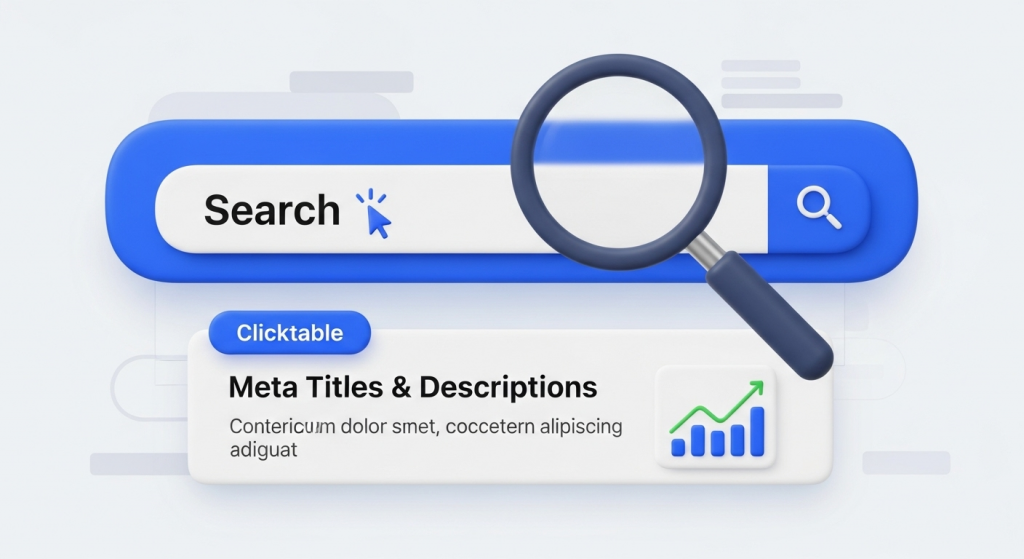 How to Write Meta Titles and Descriptions That Convert In the vast, crowded marketplace of the internet, first impressions are everything. When a potential customer searches on Google for a product or service you offer, what do they see? They see a list of blue links and short descriptions. That small, often overlooked snippet of text is your digital handshake, your storefront window on the world’s largest high street: the Search Engine Results Page (SERP). This is where your meta title and meta description come into play. They are arguably two of the most critical elements of your on-page SEO. Getting them right can dramatically increase traffic and conversions, while getting them wrong can leave you invisible. For small business owners, mastering this skill is not just a technical task; it’s a powerful marketing move that can deliver a significant return on investment. First Things First: What Are Meta Titles and Descriptions? Before we dive into the “how,” let’s clarify the “what.” While they sound technical, the concepts are quite simple. Meta Title (or Title Tag) The meta title is the clickable headline of a search result, displayed in blue on Google. It’s also what appears in the browser tab when you’re on a webpage. Its primary job is to tell both users and search engines what a specific page is about in a clear and concise way. It’s a direct and powerful ranking factor, making it a crucial piece of your SEO puzzle. Meta Description The meta description is the short paragraph of text (usually up to 160 characters) that appears below the meta title in the search results. Think of it as the “ad copy” for your webpage. While Google has stated it’s not a direct ranking factor, it has an enormous impact on your click-through rate (CTR). A compelling description entices users to choose your link over a competitor’s, and a higher CTR signals to Google that your page is a relevant and valuable result, which can indirectly improve your rankings over time. Why They Matter for Your Small Business For a small business, every website visitor is a potential lead. Optimizing your meta tags is a low-effort, high-impact way to attract more of the right kind of visitors. A well-crafted title and description work together to: Increase Visibility and Clicks: A compelling, keyword-rich title helps you rank higher, while a persuasive description encourages users to click on your result instead of the one above or below it. Set Clear Expectations: They provide a preview of your content, ensuring that the visitors who click through are genuinely interested in what you have to offer. This reduces your bounce rate and tells Google that users found what they were looking for. Build Brand Recognition: Consistently including your brand name in your meta titles helps build familiarity and trust with users directly on the SERP. In essence, these elements are the foundation of a successful SEO strategy that turns searchers into customers. How to Write Meta Titles That Win the Click Your meta title is your headline. It needs to be precise, informative, and compelling. Follow these best practices to create titles that work hard for your business. 1. Master the Length Google doesn’t measure title length in characters, but in pixels. However, a general rule of thumb is to keep your titles between 50 and 60 characters. This usually prevents them from being cut off in search results. You can use a free tool to check how your title will appear. According to extensive research by Moz, keeping titles within this range ensures maximum visibility. 2. Front-Load Your Primary Keyword Place your most important keyword or phrase as close to the beginning of the title as possible. Users scan search results quickly, and seeing their search term immediately confirms that your page is relevant to their needs. For example, “Plumbing Services in Springfield” is more effective than “Springfield Company Offering Plumbing Services.” 3. Be Unique and Specific Every page on your website should have a unique meta title. Duplicate titles confuse search engines and provide a poor user experience. Be specific about the content of the page. Instead of “Services,” use “Custom Cabinet Design for Kitchens.” This targets users with a clearer intent and has a better chance of ranking for long-tail keywords. 4. Include Your Brand Name It’s a great practice to add your brand name at the end of the title, usually separated by a pipe (|) or a hyphen (-). This builds brand awareness and can encourage clicks from users who already recognize and trust your business. For example: “Custom Cabinet Design for Kitchens | Smith & Co. Woodworking”. Crafting Meta Descriptions That Convert If the title is the headline, the meta description is the compelling summary that closes the deal and earns the click. It’s your 160-character elevator pitch. 1. Focus on Value Don’t just summarize the page; sell the benefit. What problem does your page solve for the user? What will they gain by clicking? Use active, persuasive language. Instead of “This page contains information about our accounting services,” try “Get expert accounting services designed for small businesses. Save time, reduce stress, and maximize your profits.” 2. Include a Call-to-Action (CTA) Tell the user what you want them to do next. Simple, action-oriented phrases can significantly boost your CTR. Try including phrases like: Learn more. Get a free quote. Shop now. Explore our work. Download the guide. 3. Weave in Your Keywords Naturally While not a direct ranking factor, including your target keyword is still crucial. When a user’s search query matches a term in your description, Google will often bold it, making your result stand out visually on the page. Just be sure to integrate it naturally, avoiding spammy keyword stuffing. A Note on Google’s Autonomy It’s important to know that Google doesn’t always use the meta description you’ve written. Sometimes, it will pull a different snippet of text from your page if it believes that text better answers a user’s
 Google’s Big Shake-Up: What the March 2024 Update Means for Your Small Business If you’ve noticed some turbulence in your website traffic or search rankings lately, you’re not alone. Google has just rolled out one of its most significant updates in years: the March 2024 Core Update, combined with new, aggressive spam policies. While talk of algorithm changes can feel technical and overwhelming, this update is something every small business owner needs to understand. It’s a clear signal from Google about the future of online visibility, and it creates a massive opportunity for businesses that are focused on quality and authenticity. So, what’s really happening, and how can you ensure your business thrives in this new landscape? Let’s break it down in simple terms. The Heart of the Matter: The March 2024 Core Update For years, Google has had a separate system to identify content that seemed created more for search engines than for people, called the “Helpful Content System.” With the March 2024 update, that system is no longer separate. It has been fully integrated into the main core ranking algorithm. This is a fundamental shift. It means that the concept of “helpfulness” is now a central, non-negotiable factor in how Google evaluates every single page on the web. A Laser Focus on “People-First” Content Google’s goal is to clean up the search results, and they’re being very direct about it. Their announcement stated this update will reduce low-quality, unoriginal content in search results by 40%. The message is crystal clear: content created to trick algorithms is out. Content created to genuinely help, inform, and solve problems for real people is in. This means your website content can no longer just be “good enough.” It needs to be exceptional. It must answer your audience’s questions thoroughly, demonstrate your unique expertise, and provide a satisfying user experience. Thin, generic, or unhelpful pages that once might have ranked are now at serious risk of disappearing from search results entirely. The War on Spam: Understanding the New Policies Alongside the core update, Google launched a series of new spam policies designed to combat common manipulative tactics. While you may not be using these tactics, understanding them helps you see what Google is cracking down on and why quality is paramount. Scaled Content Abuse This policy targets the practice of generating massive amounts of low-quality content with the primary goal of manipulating search rankings. This is often done using automation and AI tools without human oversight or editing. While AI can be a powerful assistant, Google is specifically targeting content that offers no real value to the reader. This is a critical distinction for businesses exploring AI tools; the focus must be on using technology to enhance, not replace, genuine human expertise and creativity. Site Reputation Abuse You may have heard of this as “parasite SEO.” It’s a practice where third-party websites publish their own low-quality pages on a trusted, high-authority website to take advantage of its good reputation. For example, a trusted educational website might have a section with coupon pages from an unrelated third party. Google is now cracking down on this, ensuring that all content on a website lives up to the site’s primary purpose and reputation. Expired Domain Abuse This is the practice of buying expired domain names that once had authority and repurposing them with low-quality content to rank quickly. Google now considers this spam, closing a loophole that shady SEO providers have exploited for years. What This Means for Your Small Business Website This update isn’t a reason to panic; it’s a reason to lean into what you already do best: serve your customers. For ethical, customer-focused small businesses, this is good news. It levels the playing field, making it harder for spammers and content farms to outrank you. Here’s what you should focus on right now: Quality Over Quantity: One excellent, in-depth blog post that truly helps a customer is now far more valuable than ten thin, generic articles. It’s time to audit your content and ask, “Does this genuinely serve my audience?” Demonstrate Your Expertise: Your unique experience is your greatest SEO asset. Share case studies, customer stories, detailed how-to guides, and personal industry insights. This is what Google calls E-E-A-T: Experience, Expertise, Authoritativeness, and Trustworthiness. Improve User Experience: A helpful website is an easy-to-use website. Ensure your site is fast, mobile-friendly, and easy to navigate. A positive user experience signals to Google that your site is high-quality. This is a core component of our Website Design Services, where we build sites for users first. Rethink Your SEO Strategy: If your current strategy is built on old-school tactics like keyword stuffing or buying cheap backlinks, it’s time for a change. Modern SEO is about creating a comprehensive and helpful resource for your target audience. How to Create Content That Ranks in 2024 and Beyond Adapting your digital marketing strategy to this new reality is straightforward when you focus on one guiding principle: be the best answer for your customer. The goal is to create content that a user would be happy to find, bookmark, and share. Answer Your Customers’ Real Questions Think about the top ten questions you get from customers on the phone or via email. These are your next ten blog posts or website pages. Use keyword research to understand the exact language they use, but let the intent behind their questions guide your content creation. A robust SEO & Content Strategy is built on this foundation of customer understanding. Show, Don’t Just Tell Instead of just saying you’re an expert, prove it. Create content that demonstrates your experience. A landscaping company could create a detailed video guide on seasonal plant care. A financial advisor could write a case study on helping a client navigate a complex financial decision. A home contractor could publish a project portfolio with before-and-after photos and testimonials. This is original, valuable content that AI can’t replicate and that your audience will trust. Your Path Forward in a
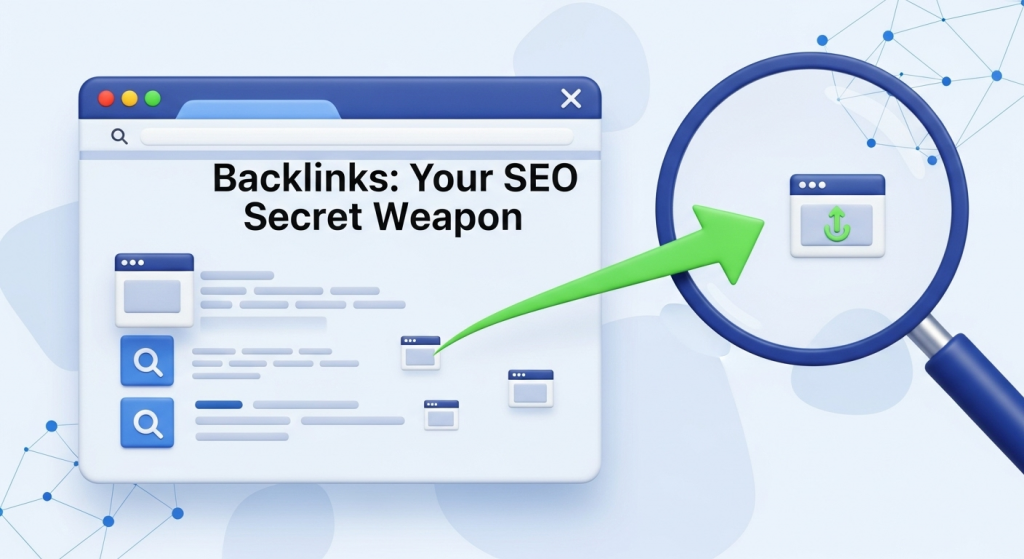 Why Backlinks Are Your Secret Weapon for SEO Success As a small business owner, you’ve likely heard the term “SEO” countless times. You know it’s essential for getting your website noticed by potential customers on Google. But one of the most powerful, and often misunderstood, components of a successful SEO strategy is something called backlinks. In the ever-evolving world of digital marketing, backlinks remain a critical factor in how search engines determine your website’s authority, credibility, and ultimately, its ranking. Think of the internet as a massive, interconnected city. Your website is your storefront. A backlink is like a road sign on a busy highway pointing directly to your shop. The more signs you have from reputable, high-traffic locations, the more visitors you’ll get. This article will demystify the role of backlinks in modern SEO, explain why quality trumps quantity, and provide actionable strategies to help your business earn the links that drive real growth. What Exactly Is a Backlink? In the simplest terms, a backlink is a link from one website to another. When another website includes a hyperlink that directs its visitors to a page on your site, you have earned a backlink. Search engines like Google view these links as votes of confidence. If a well-respected website is willing to send its audience to your page, it signals to Google that your content is valuable, trustworthy, and relevant. This concept is a cornerstone of how Google’s algorithms work. The more high-quality “votes” your website receives, the higher its authority becomes in the eyes of search engines. This increased authority translates directly into better visibility in search results for the keywords that matter to your business, leading to more organic traffic, more leads, and more sales. The Great Shift: Why Quality Overwhelms Quantity In the early days of SEO, the game was all about quantity. Marketers would try to get as many links as possible, regardless of their source. This led to spammy tactics like buying links, stuffing them in irrelevant directories, and posting generic comments on hundreds of blogs. Fortunately, those days are long gone. Google has become incredibly sophisticated at identifying and penalizing manipulative link-building tactics. According to Google’s own spam policies, any links intended to manipulate search rankings can negatively impact a site’s performance. Today, the focus is squarely on the quality and relevance of your backlinks. A single, authoritative link from a respected industry publication is infinitely more valuable than a thousand low-quality links from spammy websites. Hallmarks of a High-Quality Backlink So, what separates a powerful, rank-boosting backlink from a worthless or even harmful one? Several key factors come into play: Relevance: The most valuable links come from websites that are topically related to your own. If you run a local bakery, a link from a popular food blogger is far more potent than a link from a blog about auto repair. Authority: Links from established, trusted websites carry more weight. While Google’s internal PageRank score is not public, marketing experts use metrics like Domain Authority (DA) to estimate a site’s strength and linking power. A link from a major news outlet or a leading industry association is a powerful signal of trust. Placement: A link that is naturally integrated within the main body of a blog post or article is more valuable than one tucked away in a footer or sidebar. This contextual placement shows that the link is an genuine editorial endorsement. Anchor Text: The clickable text of a link is known as anchor text. When the anchor text is descriptive (e.g., “gourmet coffee beans” instead of “click here”), it provides search engines with important context about the linked page’s content. Practical Link-Building Strategies for Small Businesses Earning high-quality backlinks is a marathon, not a sprint. It requires a strategic and consistent effort, but the payoff is significant. The good news is that you don’t need a massive marketing budget to get started. Here are some effective strategies tailored for small businesses. Create Link-Worthy Content This is the foundation of all modern link building. You need to give other websites a reason to link to you. This means creating outstanding content that serves as a resource for your industry. Think about what your target audience finds valuable: In-depth guides and tutorials that solve a common problem. Original research or case studies with unique data. Visually appealing infographics that simplify complex topics. Compelling local stories or community resources. When you create the best resource on a given topic, others will naturally link to it. Of course, this content needs a professional home, which is why effective Website Design Services are so crucial for making a great first impression and showcasing your expertise. Leverage Local SEO Opportunities For most small businesses, local links are gold. Start by ensuring your business is listed accurately in major online directories like Google Business Profile, Yelp, and industry-specific portals. Get involved in your local community. Sponsoring a local charity event, joining the Chamber of Commerce, or being featured in a local newspaper can all result in powerful, highly relevant backlinks that drive both rankings and foot traffic. Become a Guest Contributor Guest blogging involves writing an article for another website in your industry. In exchange for your valuable content, you typically receive a link back to your website, often in an author bio. This is a fantastic way to build authority, reach a new audience, and earn a quality backlink simultaneously. Focus on contributing to reputable blogs that your ideal customers already read and trust. Building a successful backlink profile doesn’t happen by accident; it’s a core component of a holistic SEO Strategy that integrates content creation, public relations, and community outreach into a cohesive plan. Streamlining Your Efforts with Technology While the principles of link building are straightforward, the execution can be time-consuming. Manually finding opportunities, crafting outreach emails, and tracking your progress requires significant effort. This is where modern tools can help. Platforms like Ahrefs and Moz allow you to analyze your competitors’ backlink
 Google’s Latest Shake-Up: Is Your Website Content Helping or Hurting You? If you’ve noticed some turbulence in your website traffic or search rankings lately, you’re not alone. Google is in the middle of rolling out significant changes to its core algorithm, and the aftershocks are being felt across the web. For small business owners, these updates aren’t just technical noise; they represent a fundamental shift in how you should approach your online presence. The key takeaway? Google is doubling down on rewarding authentic, genuinely helpful content and penalizing websites that take shortcuts. This isn’t a reason to panic. In fact, it’s a massive opportunity for businesses that are truly focused on serving their customers. Let’s break down what this major update means for you, how it affects your website, and what practical steps you can take right now to ensure you come out on top. Understanding the “Helpful Content” Revolution For years, Google has been talking about “helpful content,” but its March 2024 Core Update has cemented this concept as a central pillar of its ranking system. Previously, the “Helpful Content System” was one of many signals Google used. Now, as Google explained in its announcement, it has been fully integrated into the main core algorithm. This means it carries more weight than ever before. So, what does Google consider “helpful”? It’s content created for people, not just for search engines. It answers a user’s question thoroughly, provides a unique insight, solves a problem, or demonstrates firsthand experience. It’s the difference between a generic, bland article on “How to Choose a Plumber” and an article by a local plumbing company that details common issues in your specific city, shares customer stories, and offers practical advice based on 20 years of experience. The latter demonstrates what Google calls E-E-A-T: Experience, Expertise, Authoritativeness, and Trustworthiness. From Theory to Practice: What Helpful Content Looks Like To improve your small business SEO, you must shift your mindset from “what keywords do I need to include?” to “what questions can I answer for my customers?” Your goal is to create the most useful resource on a given topic for your specific audience. Here are the hallmarks of high-quality, helpful content: It Demonstrates Real Experience: The content shows you’ve actually used the product, visited the place, or performed the service you’re writing about. Original photos and unique personal insights are golden. It Offers Deep Expertise: It goes beyond surface-level information and provides comprehensive answers. It anticipates follow-up questions and addresses them proactively. It Is Credible and Trustworthy: The information is accurate, well-researched, and unbiased. Your “About Us” page and author biographies are crucial for establishing this trust. It Provides a Good User Experience: The content is easy to read on any device, loads quickly, and is free from intrusive pop-ups or ads. A professional, user-friendly site is a key part of the puzzle. Auditing your website through this lens is the first step. A well-designed SEO & Content Strategy focuses on building these signals of trust and value directly into your website’s pages. The Double-Edged Sword of AI-Generated Content A major focus of Google’s latest update is cracking down on “scaled content abuse.” This largely targets the practice of using AI to generate hundreds or thousands of low-quality, generic articles in an attempt to manipulate search rankings. If your strategy has been to churn out massive volumes of unedited AI content, your site is at serious risk. However, Google is not anti-AI. It is anti-spam. There’s a critical difference. Using AI as a tool to assist a human expert is a powerful and effective strategy. AI can help you brainstorm ideas, create outlines, check for grammar, and overcome writer’s block. But the final product must be edited, fact-checked, and infused with your unique human experience and expertise. Think of AI as an intelligent assistant, not a replacement for your knowledge. The businesses that will thrive are those using AI to enhance their content creation process, not automate it entirely. This approach allows you to produce high-quality, helpful content more efficiently, which is a perfect fit for our AI Automations for Small Business philosophy—using technology to amplify your human strengths. Actionable Steps to Align with Google’s Update Navigating these changes requires a proactive approach. Don’t wait for your rankings to drop. Here are some concrete steps you can take to fortify your website and improve your online visibility. Conduct a Content Audit: Go through your most important website pages and blog posts. Ask yourself honestly: “If I were a customer, would this page satisfy my search? Is it truly helpful?” Be ruthless. As HubSpot explains in their guide to content audits, the goal is to identify what to keep, what to improve, and what to remove. Prune Unhelpful Content: Deleting or significantly rewriting thin, low-quality, and outdated content can send a powerful positive signal to Google. It shows you are committed to quality over quantity. One truly excellent page is worth more than 20 mediocre ones. Focus on People-First Content: For all new content, start with your customer’s needs. What are their biggest pain points? What questions do they ask most often? Create content that directly addresses these needs with your unique business perspective. Enhance Your User Experience: A clunky, slow, or hard-to-navigate website undermines even the best content. Ensure your site is mobile-friendly and that your core information is easy to find. A clean and professional Website Design Services partner can make a world of difference here. The Future is Human-Centric The key takeaway from Google’s latest moves is clear: the future of SEO is human-centric. The tricks and shortcuts that worked in the past are becoming less effective and more risky. Lasting success in search rankings now depends on your ability to provide genuine value and demonstrate your real-world expertise. By focusing on creating truly helpful content that serves your audience, you’re not just pleasing an algorithm—you’re building a stronger, more resilient business and a loyal customer base. If you’re ready to align your
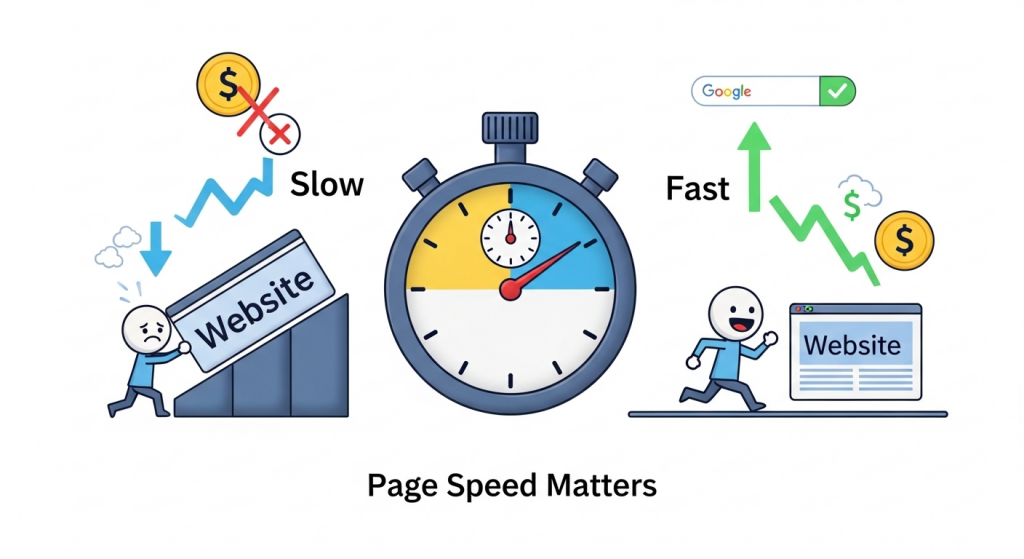 How Page Speed Affects Your Google Rankings (And Your Bottom Line) In the digital world, speed is everything. Think about the last time you clicked a link and waited… and waited. How long did it take before you gave up and hit the back button? Five seconds? Three? For most people, the patience threshold is incredibly low. That brief moment of frustration is more than just an inconvenience; it’s a critical business problem. Your website’s loading time, commonly known as page speed, is no longer a minor technical detail. It has become a cornerstone of online success. It directly influences how users perceive your brand, whether they stay to become customers, and, crucially, how Google sees and ranks your site. For a small business, understanding and optimizing page speed isn’t just a good idea—it’s a competitive necessity. What Is Page Speed and Why Does It Matter? Page speed measures how quickly the content on one of your web pages loads completely. This isn’t just about how fast your homepage appears; it applies to every single page, from your services list to your blog posts. While a one- or two-second difference might seem trivial, it has a massive impact on user behavior. A slow website creates a poor user experience (UX). It tells your potential customers that your site is clunky, inefficient, or even untrustworthy. The data backs this up. According to research highlighted by digital marketing expert Neil Patel, even a one-second delay in page response can result in a 7% reduction in conversions. For a small business, that’s a significant amount of lost revenue simply left on the table due to slow performance. When visitors become frustrated, they leave. This action of visiting a single page and then leaving is called a “bounce.” A high bounce rate signals to search engines that your site isn’t providing the value or experience users are looking for, which can harm your search engine optimization (SEO) efforts. The Direct Link: Page Speed as a Google Ranking Factor Google’s primary goal is to provide its users with the most relevant and highest-quality results. A huge part of that quality is the user experience on the destination website. Because of this, Google has officially used site speed as a ranking signal for over a decade. In recent years, they have doubled down on this with the introduction of Core Web Vitals. Understanding Core Web Vitals Core Web Vitals are a specific set of metrics that Google uses to measure the real-world user experience of a webpage, focusing on loading, interactivity, and visual stability. Think of them as Google’s official report card for your site’s performance. While you don’t need to be a developer to understand their importance, knowing what they measure can help you grasp why speed is so critical: Largest Contentful Paint (LCP): This measures loading performance. In simple terms, it’s the time it takes for the main, largest piece of content (like a hero image or a block of text) to appear on the screen. A good LCP score reassures the user that the page is actually loading. First Input Delay (FID) / Interaction to Next Paint (INP): These measure interactivity. They calculate the time from when a user first interacts with your page (like clicking a button or a link) to when the browser is able to respond to that action. A slow response time here feels like the website is lagging or frozen. Cumulative Layout Shift (CLS): This measures visual stability. Have you ever tried to click a button on a page, only for an ad to load suddenly and shift the layout, causing you to click the wrong thing? That’s CLS. It’s a measure of how much your page content unexpectedly moves around as it loads. Passing the Core Web Vitals assessment, as detailed in Google’s own web.dev resources, sends a strong positive signal to the search engine. It confirms your site provides a smooth and professional experience, which is a key component of a modern SEO strategy. Beyond Rankings: How Speed Impacts Your Business Goals Improving your page speed does more than just help you climb Google’s search results. It has a direct and measurable impact on your key business objectives. Better User Experience and Brand Perception A fast, responsive website feels modern and professional. It builds trust and confidence in your brand. Conversely, a slow site can make your business seem outdated and unreliable, driving potential customers to your faster competitors before you even have a chance to show them what you offer. Higher Conversion Rates This is where performance translates directly into profit. A faster website encourages users to stay longer, view more pages, and, most importantly, take action. Whether your goal is to generate leads, sell products, or book appointments, every second counts. As HubSpot points out, faster pages consistently see better conversion rates because they remove friction from the customer journey. Improved Mobile Performance With a majority of web traffic now coming from mobile devices, a fast mobile experience is non-negotiable. Google uses “mobile-first indexing,” meaning it primarily looks at the mobile version of your site for ranking purposes. Since mobile connections can be less reliable than broadband, page speed is even more critical for these users. Practical Steps to Improve Your Website Speed Boosting your website’s performance involves a combination of technical optimizations. While some are complex, several fundamental practices can deliver significant improvements. A professional agency focuses on these areas as part of a comprehensive website design and development process. Here are a few key strategies we implement for our clients: Optimize Images: Large, uncompressed images are one of the most common causes of slow websites. Properly formatting and compressing images can drastically reduce page load times without a noticeable loss in quality. Leverage Browser Caching: This technique stores parts of your website on a visitor’s device. When they return, their browser doesn’t have to reload everything from scratch, making subsequent visits much faster. Minimize Code (CSS, JavaScript, & HTML): Clean, efficient
 Google’s AI Overviews Are Live: A Small Business Guide to Staying Visible in Search If you’ve used Google in the last few days, you may have noticed a significant change. At the very top of the results page for many searches, there’s now a detailed, AI-generated summary designed to answer your question directly. This is Google’s new “AI Overview,” and its widespread rollout marks one of a biggest shifts in search engine history. For small business owners, this isn’t just a tech headline; it’s a fundamental change to how customers will find you online. The panic is palpable in some marketing circles, with fears of plummeting website traffic. But change always brings opportunity. Understanding what AI Overviews are and how they work is the first step toward adapting your digital marketing strategy to not just survive, but thrive in this new landscape. What Exactly Are Google’s AI Overviews? Think of an AI Overview as a super-smart research assistant. Instead of just giving you a list of ten blue links and letting you do the work, Google now analyzes the top-ranking pages, synthesizes the information, and presents a concise summary at the top of the page. This summary often includes text, images, and links to the sources it used to generate the answer. The goal, from Google’s perspective, is to provide a better, faster user experience by answering complex questions in one go. For example, a search like “best durable and pet-friendly flooring options for a small apartment” might now generate a paragraph comparing vinyl, laminate, and tile, complete with pros and cons, pulled from several different home improvement blogs and retail sites. How This Changes the Game for Your Business The immediate concern for many businesses is the rise of the “zero-click search.” If a user gets their answer directly from the AI Overview, they may have no reason to click through to your website. While this is a valid concern, it’s not the whole story. Being featured as a source within an AI Overview is the new “position zero.” It places your brand in a position of authority and can drive highly qualified, ready-to-convert traffic from users seeking more in-depth information. 5 Actionable Steps to Adapt Your SEO Strategy Now Panicking won’t help, but taking strategic action will. The core principles of good SEO haven’t been thrown out; they’ve just become more important. Here’s how to adjust your approach for an AI-powered search world. 1. Double Down on People-First, Authoritative Content: Google’s AI is built to recognize and reward genuine expertise. This is the time to focus on what Google calls helpful, reliable, people-first content. This means writing from a place of experience, demonstrating your expertise, and proving your authoritativeness and trustworthiness (E-E-A-T). Vague, generic content will be ignored. Your content needs to be the best, most comprehensive answer to your customers’ questions. A robust SEO & Content Strategy is no longer optional. 2. Answer Specific Questions Clearly: Structure your website content to directly answer the questions your customers are asking. Use clear headings (H2s, H3s) for different topics and consider adding FAQ sections to your service and product pages. Think about the “who, what, when, where, why, and how” questions related to your industry. The more clearly and concisely you answer these, the more likely the AI will be to cite your page as a source. 3. Target Long-Tail, Conversational Keywords: Short, generic keywords are becoming less effective. AI Overviews are most often triggered by longer, more conversational queries—the kind of questions people speak into their phones or ask a smart assistant. Tools like AnswerThePublic or Google’s “People Also Ask” section can help you find these long-tail keywords. As digital marketing experts have noted for years, this traffic is often higher quality and closer to making a purchase decision. 4. Use Structured Data (Schema Markup): This sounds technical, but the concept is simple. Structured data is a piece of code you add to your website to help Google understand your content’s context. It explicitly tells Google things like your business hours, product prices, customer reviews, and event dates. According to leading SEO resources like Moz, using schema can significantly increase your chances of being featured in rich results and, by extension, AI Overviews. 5. Enhance Your Local SEO: For brick-and-mortar businesses, local search is more critical than ever. AI Overviews frequently pull information directly from a business’s Google Business Profile (GBP) for location-based queries. Ensure your GBP is completely filled out, accurate, and regularly updated with posts, photos, and new reviews. Beyond Google: Building a Resilient Digital Presence This shift from Google is a powerful reminder that building your entire business on rented land is a risky proposition. While SEO is crucial, it’s vital to build a holistic digital presence that you control. This means investing in other channels to attract and retain customers. Focus on building your email list, engaging with your audience on the social media platforms where they spend their time, and creating a brand that people seek out directly. Your website must be more than just an information hub; it must be a conversion engine. This is where excellent user experience becomes paramount. Our Website Design Services focus on creating fast, intuitive, and persuasive online experiences that turn visitors into customers, regardless of how they found you. Furthermore, consider how you can use AI to your advantage. While Google uses AI to answer questions, you can leverage AI Automations for Small Business to improve your customer service with chatbots, personalize your email marketing, and streamline your internal processes, giving you more time to focus on growth. The arrival of AI Overviews is not an end, but an evolution. By focusing on quality, authority, and the genuine needs of your audience, you can navigate this change successfully. The businesses that adapt by creating truly valuable content and a strong, multi-channel brand presence will be the ones who win in the new era of search. If you’re ready to turn these insights into a future-proof
 The Ultimate On-Page SEO Checklist for Small Businesses in 2025 In today’s crowded digital marketplace, simply having a website is no longer enough. To attract customers and grow your business, you need to be visible when potential clients are searching for your products or services. This is where search engine optimization (SEO) comes in, and its foundation lies in a solid on-page strategy. While the world of SEO can seem complex, mastering the on-page elements is the most powerful and direct way to improve your rankings and drive qualified traffic. On-page SEO refers to all the optimizations you perform directly on your website’s pages to help search engines like Google understand your content and rank it higher. Think of it as setting a strong foundation for your entire digital marketing house. This checklist will guide you through the essential on-page SEO practices for 2025, broken down into simple, actionable steps. Why On-Page SEO Still Matters in an AI-Driven World With the rise of AI and increasingly sophisticated search algorithms, some business owners wonder if traditional on-page SEO is still relevant. The answer is an emphatic yes. In fact, it’s more critical than ever. Google’s core mission is to provide users with the most helpful, relevant, and high-quality results for their queries. A well-optimized page is a clear signal to Google that your content fits this description. Modern on-page SEO has evolved beyond simply stuffing keywords into a page. It’s now deeply intertwined with user experience (UX). A page that is easy to read, navigate, and understand is not only good for your visitors but also for search engines. By focusing on creating a fantastic experience for your human audience, you are naturally aligning your website with what Google wants to see. Your 2025 On-Page SEO Checklist Follow these steps to ensure your website pages are perfectly optimized to attract and convert your ideal customers. 1. Master Keyword Research and User Intent Before you write a single word, you must understand what your audience is searching for. Keyword research is the process of identifying the terms and phrases people use to find solutions that you provide. However, in 2025, it’s crucial to look beyond the keywords themselves and focus on the intent behind them. Informational Intent: The user is looking for information (e.g., “how to fix a leaky faucet”). Navigational Intent: The user is trying to find a specific website (e.g., “Acme Plumbing”). Transactional Intent: The user is ready to make a purchase (e.g., “buy emergency plumbing services”). Commercial Investigation: The user is comparing products or services (e.g., “best plumbers in [city]”). Aligning your content with user intent ensures that you are providing true value, which Google rewards. Tools like Ahrefs, SEMrush, and even Google’s own Keyword Planner can help you discover what your audience is searching for. A comprehensive SEO strategy begins with this fundamental understanding of your customer’s journey. 2. Craft High-Quality, People-First Content Content is the heart of on-page SEO. Gone are the days of thin, keyword-stuffed articles. Today, success depends on creating comprehensive, well-researched, and genuinely helpful content that answers your audience’s questions thoroughly. Google’s standards for content quality are summarized by the acronym E-E-A-T: Experience, Expertise, Authoritativeness, and Trustworthiness. As Google explains in its guide to creating helpful content, your pages should demonstrate first-hand experience and deep knowledge of the topic. This means writing original content that showcases your unique insights and builds credibility with your audience. While new technologies can help streamline your workflow, it’s vital to use them as a tool, not a replacement for human expertise. Our guide to AI Automations for Small Business explores how to leverage technology ethically and effectively. 3. Optimize Your Title Tags and Meta Descriptions Your title tag and meta description are the first things a user sees in the search results. They act as your digital storefront sign, enticing users to click on your link instead of a competitor’s. Title Tag: This is the clickable headline in the search results. Keep it under 60 characters, include your primary keyword near the beginning, and make it compelling. Meta Description: This is the short snippet of text below the title. While not a direct ranking factor, a well-written meta description (under 160 characters) improves click-through rates. Treat it like ad copy that summarizes the page’s value. 4. Structure Content with Clear Headings and Formatting No one wants to read a giant wall of text. Proper formatting makes your content more readable for users and easier for search engines to crawl and understand. Use a logical hierarchy for your headings: H1 Tag: Your main page title. You should only have one H1 per page. H2 Tags: Use these for the main sections of your article. H3 Tags: Use these for subsections within your H2 sections. Additionally, use short paragraphs, bulleted lists, and bolded text to break up your content and highlight key points. This improves dwell time and user engagement—two important signals for search engines. 5. Nail Your Internal and External Linking Strategy A smart linking strategy is essential for on-page SEO. Links create a web of connections that help search engines discover your content and understand the relationships between different pages. Internal Links: These are links that point from one page on your website to another. They help guide users and search engine crawlers through your site, distribute authority, and establish a clear site architecture. External Links: These are links that point from your website to another reputable website. Linking to high-authority sources like a guide from Moz or a study from Forbes can increase the trustworthiness and credibility of your own content. 6. Optimize Images and Media Images, videos, and other media can make your content more engaging, but they must be optimized. Large media files can slow down your site, which hurts user experience and your rankings. Always compress images before uploading them. Furthermore, use descriptive file names (e.g., “on-page-seo-checklist.jpg” instead of “IMG_1234.jpg”) and always fill out the alt text. Alt text is an HTML attribute
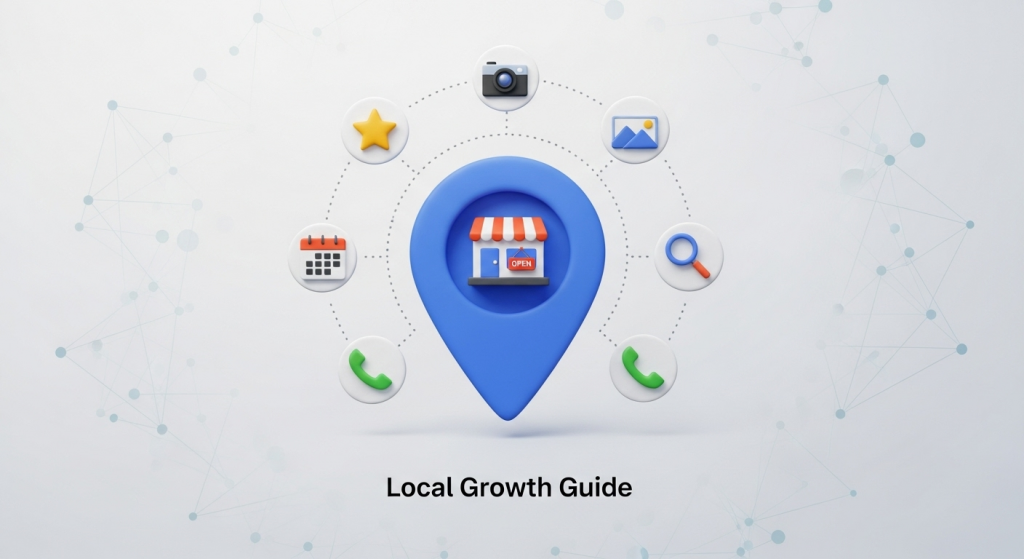 Unlock Local Growth: Your Complete Guide to Optimizing a Google Business Profile For a small business, standing out in a crowded local market can feel like a monumental task. You have a fantastic product or service, but how do you ensure local customers find you when they need you most? The answer is simpler and more powerful than you might think: your Google Business Profile (GBP). Formerly known as Google My Business, this free tool is your digital storefront on Google Search and Maps. When optimized correctly, it’s arguably the single most effective tool for driving local traffic, phone calls, and foot traffic to your business. This guide will walk you through everything you need to know to transform your profile from a simple listing into a customer-generating machine. Why Your Google Business Profile is a Local Marketing Powerhouse Think about the last time you searched for “coffee shop near me” or “plumber in [your city].” The first thing you likely saw was the “Local Pack”—a map with three prominent business listings. Securing a spot in this coveted space can dramatically increase your visibility and leads. Your Google Business Profile is your ticket to that prime real estate. A well-managed profile builds immediate trust and credibility. It provides potential customers with all the information they need at a glance: your address, hours, phone number, website, customer reviews, and photos. According to Google’s own guidance, relevance, distance, and prominence are key factors in local search rankings. A complete and active GBP directly influences your relevance and prominence, making you a more attractive choice for both Google’s algorithm and potential customers. The Ultimate Checklist: How to Fully Optimize Your Profile Getting started is easy, but achieving optimal results requires attention to detail. Follow this checklist to ensure your profile is working as hard as you do. 1. Claim and Verify Your Profile First things first, you need to have ownership of your listing. Go to Google Maps, search for your business name, and see if a profile already exists. You can then claim it or create a new one. Google will verify your ownership, usually by mailing a postcard with a PIN to your business address. This verification step is crucial for unlocking all of GBP’s features and proves to Google that your business is legitimate. 2. Complete Every Single Section (Seriously!) An incomplete profile is a missed opportunity. Google prioritizes complete and accurate listings because they provide a better user experience. Aim for 100% completion. Go through every field and fill it out thoughtfully. Business Name, Address, Phone (NAP): Ensure this information is 100% consistent with your website and other online directories. Inconsistency can confuse search engines and harm your ranking. Website: Link directly to your homepage. This is a critical step in driving traffic to your own digital property, which is why having a professional site is so important. Hours: Keep your business and holiday hours meticulously updated. Business Description: You have 750 characters to tell your story. Use keywords naturally to describe what you do, who you serve, and what makes you unique. Services/Products: Detail every service or product you offer. Add descriptions and prices where applicable. This helps you show up for very specific long-tail searches (e.g., “emergency HVAC repair after hours”). 3. Choose Your Categories Wisely Categories tell Google what your business is all about. You’ll select a primary category, which is the most important one. Be as specific as possible. For example, choose “Italian Restaurant” instead of just “Restaurant.” After that, add several secondary categories that cover all the services you provide. This broadens the range of search queries your business can rank for. 4. Upload High-Quality Photos and Videos A picture is worth a thousand words, and on GBP, it might be worth a thousand dollars. Profiles with photos receive more requests for directions and more clicks to their websites. Showcase your business in the best possible light. Exterior and Interior Shots: Help customers recognize your location. Team Photos: Put a face to your brand and build a personal connection. Products/Services in Action: Show customers what they can expect. Videos: A short 30-second video tour or a customer testimonial can be incredibly engaging. Aim to add new photos regularly to keep your profile looking fresh and active. 5. Cultivate and Respond to Customer Reviews Reviews are the lifeblood of local SEO. According to research from sources like Moz, reviews are one of the most significant ranking factors. More importantly, they are a powerful form of social proof that heavily influences a customer’s decision. Actively encourage happy customers to leave a review. Equally important is responding to every single review—positive or negative. A thoughtful response to a positive review shows appreciation. A professional and helpful response to a negative review demonstrates excellent customer service and can even win over skeptical prospects. Advanced Strategies to Outrank Competitors Once you’ve mastered the fundamentals, you can use more advanced features to gain a competitive edge. Use Google Posts for Timely Updates Google Posts are like mini-blog posts or social media updates that appear directly on your GBP listing. They are perfect for promoting special offers, announcing new products, sharing event details, or highlighting a recent blog post. While they expire after seven days, consistent posting signals to Google that you are an active business, which can positively impact your ranking. For an in-depth look at this feature, Neil Patel offers a comprehensive guide on leveraging them effectively. Leverage the Questions & Answers Feature The Q&A section on your profile allows anyone to ask a question about your business. Be proactive here. Brainstorm common questions your customers have and post both the questions and the answers yourself. This allows you to control the narrative, address potential concerns upfront, and strategically include relevant keywords. Connect GBP to a Broader Digital Strategy Your Google Business Profile doesn’t exist in a vacuum. It’s a powerful component of a comprehensive SEO strategy. The authority of your website, your local citation profile, and your