Skip to content
 Google’s March 2024 Core Update Is Here: Your Guide to Staying Ahead If the world of digital marketing felt a little shaky recently, you’re not imagining things. Google has just announced one of its most significant updates in years: the March 2024 Core Update, coupled with a powerful new set of spam policies. For small business owners, this isn’t just technical noise; it’s a fundamental shift in how your customers find you online. But don’t worry. This change, while big, is a massive opportunity for businesses doing things the right way. This update is all about quality. Google is doubling down on its mission to clean up search results, pushing down low-quality, unhelpful content and elevating websites that offer genuine value. Think of it as a city-wide beautification project for the internet. The goal? To make sure that when a user searches for something, they find truly helpful, reliable, and human-centric answers. In this article, we’ll break down exactly what’s happening, why it’s a potential game-changer for your business, and provide a clear, actionable roadmap to not just survive, but thrive in this new landscape. What’s New? Unpacking the March 2024 Google Updates This month’s announcement isn’t just one single tweak; it’s a coordinated effort involving multiple systems. At its heart are two key components: a more refined core algorithm and stricter rules against manipulative tactics. Let’s look at them one by one. The March 2024 Core Update: A Focus on “Helpful Content” For the past year or so, Google has had a separate system called the “Helpful Content System” that would periodically assess whether a website’s content was written for people or for search engines. Now, that system has graduated. It’s no longer a separate process; its signals are now baked directly into the main core algorithm. What does that mean for you? It means that creating helpful, satisfying content isn’t just a “good idea” anymore—it’s the absolute foundation of a successful SEO strategy. Google is now more sophisticated than ever at understanding if your content actually solves a user’s problem or if it’s just a collection of keywords designed to rank. The algorithm now looks at a wide range of signals to determine if a user had a good experience on your page. Did they find what they were looking for? Was the information clear and trustworthy? Or did they click the back button in frustration and go to a competitor’s site? New Spam Policies: Targeting Low-Quality Content at Scale Alongside the core update, Google has rolled out tough new spam policies aimed squarely at tactics designed to manipulate search rankings. Their stated goal is to reduce low-quality, unoriginal content in search results by 40%. That’s a huge number, and it shows how serious they are. The new policies target three specific types of abuse: Scaled Content Abuse: This is the practice of mass-producing content with little to no human oversight, often using AI, for the primary purpose of ranking in search. If a website is churning out hundreds of generic, low-value articles that don’t offer any unique insight, it’s now in Google’s crosshairs. This doesn’t mean all AI content is bad, but it does mean content created *without care* is. Expired Domain Abuse: Some people buy expired domain names that once had a good reputation, and then fill them with low-quality, often unrelated content to piggyback on the old domain’s authority. Google is now classifying this as spam, closing a loophole that has been exploited for years. Site Reputation Abuse: You may have heard this called “Parasite SEO.” This is when a third party publishes low-quality pages on a well-respected website (like a coupon section or sponsored posts that don’t fit the site’s purpose) to take advantage of that site’s good reputation. Google is cracking down on this to ensure a site’s good name isn’t used to promote spammy content. Why This Matters for Your Small Business It’s easy to dismiss these updates as technical jargon, but they have real-world consequences for your bottom line. How your business shows up on Google directly impacts your traffic, your leads, and ultimately, your sales. This Google March 2024 core update creates both a risk and an incredible opportunity. The Risk: Losing Visibility and Traffic If your website has relied on old-school SEO tricks, thin content, or has been pumping out generic articles just to “feed the blog,” you could be at risk. A drop in rankings means fewer people see your website, which translates directly to a loss of potential customers. The days of gaming the system are ending. Businesses that don’t adapt will find it increasingly difficult to compete for valuable online visibility. The Opportunity: A Level Playing Field Here’s the good news. If you’ve always focused on genuinely helping your customers, this update is for you. Google is actively working to reward you. By clearing out the clutter and spam, this Google spam update creates more room for high-quality, authentic small businesses to shine. It levels the playing field, making it less about who has the biggest bag of SEO tricks and more about who provides the most value to their audience. This is your chance to leapfrog competitors who have been taking shortcuts. A solid SEO & Content Strategy built on expertise and customer focus is now more powerful than ever. Actionable Steps to Thrive After the March 2024 Update So, how do you make sure your business is on the winning side of this update? It’s not about a quick fix; it’s about committing to a long-term strategy centered on quality and authenticity. Here’s what you should focus on right now. Conduct a “Helpful Content” Audit Take an honest look at your website’s content. Go through your key pages—your homepage, service pages, and top blog posts—and ask yourself the tough questions that Google’s algorithm is now asking. Be objective. For each piece of content, consider: Does this content demonstrate first-hand experience or deep knowledge? Is this written for a specific, defined audience, or is
 Navigating the Shake-Up: What Google’s Latest Algorithm Update Means for Your Business If you’re a small business owner, the phrase “Google algorithm update” can send a small shiver down your spine. It often means a period of uncertainty, watching your website traffic, and wondering if the rules you were playing by have suddenly changed. Well, the ground has indeed shifted again, and this time, it’s a big one. In early March 2024, Google rolled out a major core update combined with new spam policies, and its impact is being felt across the web. But don’t panic. This change isn’t a threat; it’s an opportunity for businesses that are committed to providing real value. The core message from Google is clearer than ever: they are aggressively cracking down on low-quality, unhelpful content designed purely to rank in search results. This is a direct response to the flood of generic, often AI-generated articles that offer little real substance. For you, this means the old playbook of keyword-stuffing and churning out thin content is officially obsolete. It’s time to double down on what truly matters: creating a genuinely helpful and satisfying experience for your audience. What’s Actually Happening with Google’s Update? Let’s break down the noise. The March 2024 update isn’t just one tweak; it’s a multi-faceted effort to improve the quality of search results. Google itself stated this update is designed to reduce low-quality and unoriginal content in search results by a staggering 40%. The goal is to reward websites that provide a satisfying experience and demote those that don’t. The End of Unhelpful Content For years, Google has been refining its ability to understand content quality through its “helpful content system.” Previously, this was a separate signal. Now, it has been fully integrated into the main core ranking system. This is a crucial distinction. It means that helpfulness is no longer just a “nice-to-have” factor; it is a fundamental, non-negotiable part of how Google evaluates your entire website. If your site is bogged down with pages that don’t serve a clear purpose or answer a user’s question, it can now negatively impact the rankings of your good pages, too. A Crackdown on Spammy Tactics Alongside the core update, Google released new spam policies aimed at manipulative practices that have become more common with the rise of AI. These include: Scaled Content Abuse: This targets the practice of generating massive amounts of unoriginal content, whether by AI or human farms, with the primary goal of manipulating search rankings. It’s a direct shot at websites that publish hundreds of generic articles that all say the same thing. Expired Domain Abuse: This is the practice of buying old, expired website domains with pre-existing authority and repurposing them with low-quality content to piggyback on their old reputation. Site Reputation Abuse: This refers to situations where reputable websites rent out subdomains or folders to third parties who then publish low-quality, spammy content (think coupon sections or advertorials unrelated to the main site’s purpose). The bottom line? Shortcuts and tricks are being systematically devalued. Authenticity and genuine value are the new currency for online visibility. Why This Is Great News for Authentic Small Businesses At first glance, this might seem intimidating. But for a business owner who genuinely knows their industry and cares about their customers, this is a golden opportunity. Google is actively clearing out the digital noise, making it easier for your high-quality, expert-driven content to be seen by the right people. Your deep understanding of your customers’ problems, your unique perspective, and your hands-on experience are now your most powerful SEO assets. While faceless content farms are being penalized, your authentic voice can finally cut through. This shift levels the playing field, allowing passion and expertise to outperform sheer volume. A strong SEO & Content Strategy is no longer about tricking an algorithm; it’s about genuinely connecting with and helping your audience. Your New Playbook: Creating “People-First” Content So, how do you ensure your website is seen as “helpful” in Google’s eyes? It comes down to creating content with a “people-first” mindset. This means writing for your customer, not for a search engine. Here’s what that looks like in practice. Embrace E-E-A-T E-E-A-T stands for Experience, Expertise, Authoritativeness, and Trustworthiness. It’s the framework Google’s quality raters use to assess content quality. Think of it as a checklist for building credibility: Experience: Does the content demonstrate firsthand, real-world experience with the topic? Share case studies, personal anecdotes, and unique insights. Expertise: Does the author have the necessary knowledge and skill in the field? Showcase credentials, author bios, and in-depth explanations. Authoritativeness: Are you recognized as a go-to source in your industry? This is built over time through consistent, high-quality content and being cited by others. Trustworthiness: Is your website secure (HTTPS)? Are your policies clear? Are customer reviews positive? Trust is the foundation of it all. As experts at Moz point out, demonstrating E-E-A-T is critical for building a long-term, resilient SEO foundation. Solve Problems and Answer Questions The most helpful content addresses a specific need. Before you write a single word, ask yourself: What problem does this solve for my ideal customer? What question does it answer? Use your industry knowledge to anticipate their follow-up questions and answer them proactively within your content. Go beyond surface-level advice and provide detailed, actionable solutions that leave the reader feeling informed and empowered. Prioritize an Excellent User Experience Helpfulness isn’t just about the words on the page; it’s about the entire experience of consuming that content. A fantastic article on a slow, clunky, mobile-unfriendly website is not a helpful experience. Your site’s technical health is a crucial part of the puzzle. This is where your website’s design and development play a starring role. Our approach to Website Design Services is built on the principle that a great user experience is fundamental to success. This includes: Fast Loading Speeds: Users are impatient. A page that takes too long to load will be abandoned. Mobile-First Design: Your site
 Beyond the Algorithm: How Google’s New ‘Helpful Content’ Focus Changes Everything for Your Business If you’ve been watching your website traffic or search engine rankings lately, you might feel like you’re on a roller coaster. One day you’re up, the next you’re down, and it’s hard to know why. You’re not imagining things. In March 2024, Google rolled out one of its most significant updates in years, and it’s fundamentally changing the rules of the game for online visibility. But here’s the good news: this isn’t something to fear. For small businesses that are genuinely passionate about what they do, this update is a massive opportunity. It’s a chance to cut through the noise and connect with customers by doing what you do best—being an expert. Let’s break down what this “helpful content” focus really means and how you can position your business to thrive in this new era of search. What Exactly Is Google’s Big “Helpful Content” Update? For years, Search Engine Optimization (SEO) often felt like a technical checklist. Do you have the right keywords? Is your site speed fast enough? Are your title tags optimized? While those things still matter, Google’s latest core update has woven its “Helpful Content System” directly into its main ranking algorithm. This isn’t just another item on the checklist; it’s become the entire philosophy. In simple terms, Google is getting much, much better at telling the difference between content created specifically to rank on a search engine and content created to actually help a human being. The goal, as Google explained in its official announcement, is to reduce the amount of low-quality, unoriginal content in search results by a whopping 40%. The End of SEO “Tricks” and Loopholes This update takes direct aim at several practices that have cluttered up search results for too long: Scaled Content Abuse: This is the practice of churning out hundreds or thousands of low-quality articles, often using AI, to target a massive number of keywords without providing any real value. Google now sees this as spam. Site Reputation Abuse: You may have seen this before. A well-known, trusted website “rents out” a section of its site to a third party that publishes low-quality content on topics unrelated to the main site (like payday loan reviews on an education website). Google is closing this loophole. Unhelpful, User-Frustrating Content: This is the most important category for small businesses. It refers to any content that leaves a visitor feeling like they wasted their time. It might promise an answer it never delivers, be full of fluff, or just feel like it was written by a robot that has never actually experienced the topic at hand. The key takeaway is that the focus has shifted from “Is this content technically optimized?” to “Is this content genuinely satisfying for a user?” If the answer to the second question is no, your rankings are likely to suffer. Why This Is Fantastic News for Authentic Small Businesses Reading about algorithm updates can feel intimidating, but we want you to see this as a huge positive. For years, small business owners have had to compete with massive corporations and content farms that could afford to pump out endless pages of mediocre, keyword-stuffed articles. That strategy is now being actively penalized. This update levels the playing field. Your direct experience, your unique perspective, and your genuine desire to help your customers are now your greatest SEO assets. Google is actively looking to reward websites that provide real, first-hand expertise. Think about it: who knows more about custom home building than a custom home builder? Who can give better advice on financial planning for families than a seasoned financial advisor who works with them every day? Your real-world knowledge is a currency that can no longer be faked with cheap SEO tricks. This is your chance to shine by creating a high-quality, conversion-focused website design filled with content that truly serves your audience. The ‘Helpful Content’ Checklist: How Does Your Website Measure Up? So, how do you know if your content meets Google’s new standard? It’s less about a technical score and more about asking honest questions. Let’s walk through a checklist to see how your site stacks up. 1. Are You Writing for Your Audience, Not an Algorithm? This is the most critical question. Before you write a single word, think about the person on the other side of the screen. What problem are they trying to solve? What question do they need answered? Your content should be a direct response to that need. Does your content clearly answer the question implied by its headline? After reading your content, will someone feel they’ve learned enough to take the next step? Are you using the language your customers actually use, or is it filled with industry jargon? Does it offer a complete and satisfying answer, or does the reader need to go back to Google to find a better one? 2. Are You Demonstrating Real Experience and Trust? Google has been talking about E-E-A-T (Experience, Expertise, Authoritativeness, and Trustworthiness) for a while, and it’s now more important than ever. You need to show visitors (and Google) why you are qualified to be talking about your topic. According to an in-depth analysis by Search Engine Journal, demonstrating first-hand experience is a key differentiator for helpful content. Is it clear who wrote your content? Do you have author bios that showcase their credentials and experience? Does your “About Us” page tell the story of your business and the people behind it? Do you feature testimonials, case studies, or reviews that prove you deliver on your promises? Is your contact information easy to find, showing that you are a real, accessible business? 3. Is Your Website Experience Helping or Hurting? Helpful content is about more than just the words on the page. The container it’s delivered in—your website itself—plays a massive role. If your site is slow, confusing, or hard to use, the content is automatically perceived as
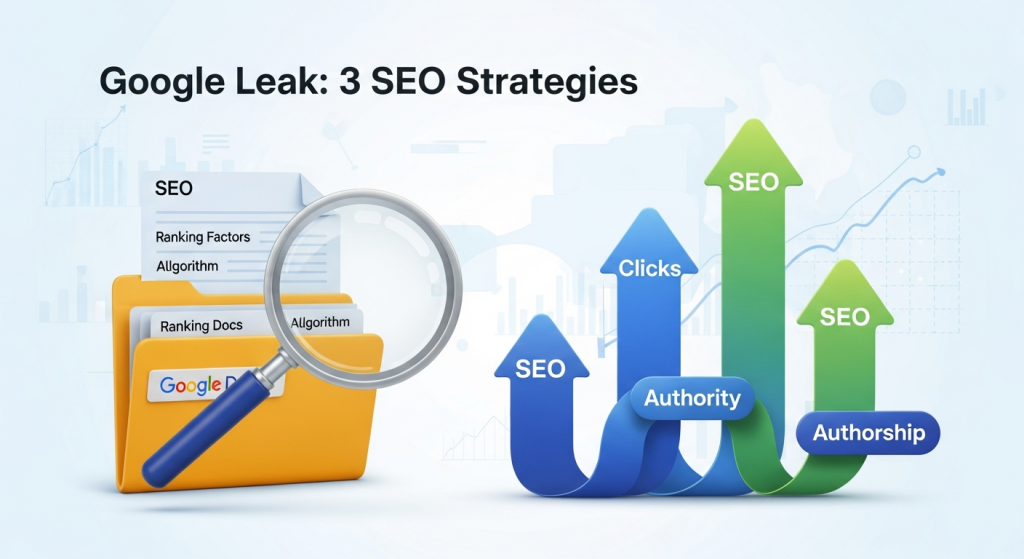 The Google Search Leak: 3 Actionable SEO Strategies for Small Businesses Right Now If you follow the world of digital marketing, you’ve probably heard the buzz. In late May 2024, thousands of internal documents from Google’s Search division were leaked, giving us the most significant peek behind the SEO curtain we’ve ever had. For years, business owners and marketers have been trying to decipher Google’s complex algorithm, often relying on a mix of official statements, case studies, and educated guesswork. This leak changes things. While it doesn’t provide a magic formula for hitting the number one spot, it does confirm many long-held theories and shines a light on factors Google has previously downplayed. For a small business owner, this information is pure gold. It cuts through the noise and tells you exactly where to focus your efforts for a better, more effective SEO strategy. So, let’s break down what this means for you. We’ve sifted through the technical analysis to bring you three clear, actionable insights from the leak that you can use to improve your online visibility today. What Was Actually Leaked? (And Why It Matters) First, a little context. An anonymous source shared over 2,500 pages of internal API documentation with SEO experts. Think of this as a partial blueprint of the data Google collects and uses to rank websites. It details various modules, features, and attributes that Google’s systems consider when evaluating web pages and entire domains. For years, Google’s public representatives have often given simplified or sometimes misleading answers about how search works. This was likely done to prevent people from gaming the system. However, these leaked documents offer a more direct, unfiltered view. They confirm that certain factors, which many SEO professionals have championed for years, are indeed part of the equation. Why does this matter for your business? Because it validates a holistic approach to SEO. It proves that success isn’t about finding a single loophole or trick. It’s about building a quality website, creating a strong brand, and providing genuine value to your users. The leak gives you the confidence to invest in the right long-term strategies. 3 Leaked SEO Insights You Can Act on Today Forget the dense, technical jargon. Here are the three most important takeaways from the Google Search leak and simple ways you can adapt your digital marketing strategy to align with them. 1. Clicks and User Engagement Are a Big Deal One of the most significant revelations is the heavy emphasis on user click data. The documents repeatedly reference a system internally named “NavBoost,” which appears to use clicks and other user interactions to refine search results. In simple terms, if users are consistently clicking on a specific result for a search query and staying on that page, Google takes notice. This is a strong signal that the page is a good answer to the query. This contradicts Google’s public stance, where they’ve often minimized the role of clicks as a direct ranking factor. The leak suggests that user behavior is not just a correlation but a crucial component of the ranking puzzle. What you should do: Write Irresistible Headlines and Descriptions: Your title tag and meta description are your sales pitch in the search results. They need to be compelling enough to earn the click over your competitors. Go beyond just keywords and focus on the user’s intent. What problem are they trying to solve? Promise a clear benefit. Improve Your On-Page Experience: Once a user clicks, you need to deliver on your promise. A high bounce rate tells Google your page wasn’t a good match. Ensure your content is easy to read, engaging, and provides a clear answer. This is where a commitment to professional Website Design Services pays off, as a well-structured and user-friendly site naturally keeps visitors engaged longer. Answer Questions Thoroughly: Structure your content to provide comprehensive answers. Use headings, bullet points, and images to break up text and make information easy to digest. The longer a user stays to consume your content, the better the signal you send to Google. 2. Your Website’s Overall Authority is Crucial For a long time, the SEO community has used the concept of “Domain Authority”—a score developed by Moz to predict a website’s ranking potential. Google has consistently denied using any such single metric. However, the leaked documents mention a feature called “siteAuthority.” While we don’t know the exact calculation, the existence of this term confirms that Google does assess a website’s overall authority or trustworthiness on a site-wide level. This means that building a strong, reputable brand online is more important than ever. A single great blog post on a weak website will struggle to compete with a good blog post on an authoritative site. What you should do: Focus on Topical Authority: Don’t try to be everything to everyone. Become the go-to expert in your specific niche. Consistently publishing high-quality, in-depth content around a core set of topics signals to Google that you are an authority in that area. This is a cornerstone of a solid SEO & Content Strategy. Build High-Quality Backlinks: A backlink is a link from another website to yours. The leak reinforces that link-building is still fundamental to SEO. Think quality over quantity. A single link from a respected industry publication is worth more than a hundred links from low-quality directories. As digital marketing expert Neil Patel explains, backlinks are like votes of confidence from other websites. Promote Your Brand, Not Just Your Pages: Engage in activities that build your brand’s reputation. This can include digital PR, getting featured in local news, participating in industry forums, and maintaining an active social media presence. Every positive mention of your brand online contributes to its overall authority. 3. Your Brand and Authorship Carry Weight The documents also show that Google’s systems are designed to identify the entities and authors behind the content. Features mentioned in the leak suggest that Google tracks authors associated with specific sites and topics. This aligns perfectly
 Google’s AI Overviews Are Here. Is Your Small Business Ready? If you’ve used Google in the last few weeks, you’ve likely noticed a significant change. Right at the top of the search results, where you used to see a list of blue links, there’s often a new, shaded box. Inside, a conversational, AI-generated summary attempts to answer your question directly. This is Google’s new “AI Overview,” and it represents one of the biggest shifts in online search in over a decade. For small business owners, this isn’t just a cosmetic update. It’s a fundamental change to the digital landscape we all operate in. It alters how potential customers find you, how they consume information, and ultimately, whether they click through to your website. While change can feel daunting, it also presents a massive opportunity for businesses that are ready to adapt. Let’s break down what AI Overviews are, how they’ll affect your business, and what you can do right now to stay visible and competitive. What Exactly Are Google’s AI Overviews? Think of AI Overviews as Google’s attempt to be a hyper-efficient research assistant. Instead of just giving you a list of websites (the traditional ten blue links) and letting you do the work of piecing together information, Google’s AI now does the synthesis for you. It scans multiple top-ranking web pages, identifies the key information related to your query, and presents it in a concise, easy-to-digest summary at the very top of the page. These overviews are designed to provide immediate answers to more complex questions. For example, a search like “what are the best durable materials for a patio in a rainy climate?” might trigger an AI Overview that lists materials, describes their pros and cons, and provides an average cost—all sourced from various home improvement blogs, contractor websites, and retail pages. The goal, from Google’s perspective, is to create a more seamless and faster search experience. But for the businesses whose content is being summarized, the implications are profound. The Big Question: How Will AI Overviews Impact Your Small Business? The rollout of AI Overviews has sparked intense debate among marketers and business owners. The impact isn’t purely positive or negative; it’s a mix of new challenges and exciting opportunities. Understanding both sides is the first step toward building a winning strategy. The Challenge: A Potential Drop in Clicks Let’s address the biggest concern head-on: a potential decrease in website traffic. If a user gets a complete answer directly from the AI Overview, their need to click on any of the underlying website links is significantly reduced. For years, the goal of SEO has been to rank in the top positions to earn that click. Now, you could be a source for the AI Overview and still not receive the direct traffic you once did. This is particularly true for simple, informational queries. If a customer is just looking for a quick fact or a simple definition that your website provides, they may get it from the overview and move on. This means businesses that rely heavily on traffic from high-volume, top-of-funnel informational content may need to re-evaluate their approach. Industry experts are closely monitoring this trend, and the consensus is that a shift in how we measure SEO success is inevitable. The Opportunity: A New “Position Zero” On the flip side, being featured prominently within an AI Overview is a massive win for visibility and authority. It’s like a supercharged version of the old “Featured Snippet.” When Google’s AI uses your content as a source for its summary, it often includes a link back to your site in a “card” format. This places your brand front and center, positioning you as a credible and authoritative source on the topic. This is your new “Position Zero.” It’s an endorsement from Google itself. Being cited in an AI Overview can build immense trust with a potential customer before they’ve even visited your website. It signals that your content is high-quality, relevant, and helpful—three things that are invaluable for attracting qualified leads. The Risk: Misinformation and Brand Representation AI is a powerful tool, but it’s not perfect. You may have seen recent news stories about some bizarre and factually incorrect AI Overviews. Because the AI is pulling information from various sources, there’s a risk that it could misinterpret your content or combine it with incorrect information from another site. This makes it more important than ever to ensure the information on your own website is crystal clear, accurate, and well-structured. You want to provide the AI with the best possible source material to represent your brand correctly. How to Adapt Your SEO Strategy for an AI-Powered World Panic is not a strategy. The fundamentals of good marketing and SEO haven’t been thrown out the window; they’ve just become more important. Here’s how you can adapt your approach to thrive in the era of AI Overviews. Double Down on E-E-A-T: Google has been talking about this for years, and now it’s non-negotiable. E-E-A-T stands for Experience, Expertise, Authoritativeness, and Trustworthiness. Google’s AI systems are designed to prioritize content from sources that demonstrate these qualities. This means creating content that showcases your real-world experience, proves your expertise, and is presented on a professional, secure website. As Google’s own documentation on creating helpful content explains, search systems are designed to reward content that is reliable and people-first. Answer Questions Directly and Thoroughly: Structure your content to directly answer the questions your customers are asking. Use clear headings, FAQ sections, and a conversational tone. Think about the entire customer journey. What are their initial questions? What follow-up questions might they have? By creating comprehensive resources, you increase the likelihood that the AI will see your page as a one-stop-shop for valuable information on a topic. Embrace Conversational and Long-Tail Keywords: People often type or speak to search engines like they’re talking to a person. Optimize your content for these longer, more natural-sounding phrases (long-tail keywords). Instead of just targeting “plumber Dallas,” create
 Is Your Website Ready for Google’s New AI Search? A Guide for Small Businesses If you’ve used Google in the past couple of weeks, you might have noticed something dramatically different. Right at the top of the page, where you used to see a list of links, there’s often a new, detailed summary answering your question directly. This is Google’s “AI Overview,” and it represents the single biggest shift in how search works in over a decade. For small business owners, this isn’t just a minor tweak—it’s a fundamental change to the digital landscape that requires immediate attention. The panic is understandable. If Google answers the question for the user, why would they ever click through to your website? It’s a valid concern, and for some, traffic will undoubtedly take a hit. But this change also presents a massive opportunity for businesses that are ready to adapt. The game has changed, but you can still win. This guide will walk you through what AI Overviews are, what they mean for your business, and the concrete steps you need to take to not just survive, but thrive in this new era of AI search. What Exactly Are Google’s AI Overviews? Think of AI Overviews as a super-smart research assistant built directly into Google. When you type in a query, especially a complex one, Google’s generative AI analyzes information from multiple web pages across the internet. It then synthesizes that information into a single, cohesive, easy-to-read summary that appears at the very top of the search results page. These summaries often include images, links to sources, and follow-up questions. This is a departure from the classic “ten blue links” we’ve all become accustomed to. Instead of presenting you with a list of potential resources to investigate, Google is trying to deliver the definitive answer right away. According to Google’s own announcement, the goal is to help users with more complex questions, allowing them to get up to speed on a topic quickly and discover new perspectives. For a small business, this means the coveted “number one” spot is no longer just a link; it could be a mention within the AI-generated answer itself. Your content, your expertise, and your brand could be featured directly in Google’s summary, giving you unparalleled visibility. The Big Question: Threat or Opportunity? Let’s address the elephant in the room: Will AI Overviews kill website traffic? The honest answer is: it’s complicated. For simple, factual queries (like “what is the capital of Vermont”), the AI can provide a quick answer, and users will likely not need to click any further. Websites that rely on traffic from these kinds of basic informational searches may see a decline. However, for small businesses, the story is much more nuanced and, frankly, more optimistic. Where the Opportunity Lies Complex Buying Decisions: When a customer is researching a product or service, they have complex needs. An AI Overview might summarize “best accounting software for freelancers,” and if your detailed comparison guide is a source, it can link directly to your page for users who want to dig deeper. Local Searches: For queries like “best plumber with emergency service near me,” the AI Overview will pull from top-rated local businesses. A strong local SEO presence makes it more likely you’ll be featured. Niche Expertise: If you are a true expert in a specific field, the AI will recognize the authority and depth of your content. Google’s systems are designed to favor content that demonstrates high levels of Expertise, Authoritativeness, and Trustworthiness (E-E-A-T). Your unique insights can’t be easily replicated and are prime material for being featured as a source. The new goal isn’t just to rank, but to become a trusted source that Google’s AI relies on. When you achieve that, you’re not just getting a click; you’re getting a powerful endorsement directly from Google. How to Adapt Your Digital Marketing Strategy for an AI-Powered World You can’t afford to sit back and see what happens. Proactive adaptation is key to securing your online visibility. Here’s how to adjust your digital marketing strategy, starting today. 1. Double Down on True Expertise (E-E-A-T) Now more than ever, Google wants to see that you are a legitimate expert in your field. Generic, surface-level content will be ignored by the AI. You need to prove your credibility. Showcase Your Authors: Include author biographies on your blog posts that detail their experience, credentials, and qualifications. Publish Case Studies and Testimonials: Provide real-world proof that your products or services deliver results. Social proof builds immense trust. Be Transparent: Make your contact information, physical address (for local businesses), and “About Us” page easy to find. A business that is easy to contact is seen as more trustworthy. 2. Answer Questions Your Customers Are Actually Asking The new search is highly conversational. People aren’t just typing keywords; they’re asking full questions. Your content needs to reflect this shift. Your SEO & Content Strategy must evolve from simply targeting keywords to answering your audience’s most pressing questions comprehensively. Create Detailed FAQ Pages: Build out robust FAQ sections that address common questions, concerns, and objections about your industry and services. Use a Question-and-Answer Format: Structure your articles and blog posts with clear headings that pose a question, followed by a direct and thorough answer. Mine “People Also Ask”: Use Google’s “People Also Ask” section for content ideas. These are literally the questions your potential customers are asking. 3. Optimize Your Website’s Technical Foundation For Google’s AI to understand and trust your content, your website needs to be technically sound, well-structured, and easy for search crawlers to read. This is where the technical side of your website design becomes critical for marketing success. Implement Schema Markup: This is a type of code that explicitly tells search engines what your content is about (e.g., this is a product, this is a review, this is a local business). It’s like giving Google a cheat sheet to your site. Prioritize Site Speed and Mobile-Friendliness: A slow
 Is Google’s AI Stealing Your Traffic? How to Adapt to AI Overviews You may have noticed something different about Google recently. Maybe you searched for a recipe, a how-to guide, or information about a local service, and instead of a list of blue links, a full, AI-generated summary appeared right at the top. You might have even seen some of the wild, and sometimes wildly inaccurate, examples on social media. This new feature is called AI Overviews, and it represents one of the biggest shifts in how we find information online in over a decade. For small business owners, this change can feel a little scary. If Google is answering questions directly, will anyone even need to click on your website anymore? It’s a valid concern, and it’s one that has the entire digital marketing world talking. But don’t panic. This shift isn’t a death sentence for your website traffic; it’s a signal that it’s time to adapt. In this article, we’ll break down what AI Overviews are, how they could impact your business, and the practical steps you can take to make sure you not only survive but thrive in this new search landscape. What Exactly Are Google AI Overviews? Think of AI Overviews as Google’s attempt to be a hyper-efficient research assistant. Instead of just giving you a list of websites where you *might* find your answer, Google’s generative AI now reads, analyzes, and synthesizes information from multiple top-ranking pages to create a single, comprehensive answer directly on the results page. These overviews appear for a wide range of queries, from simple questions like “how to fix a leaky faucet” to more complex ones like “what is the best digital marketing strategy for a local coffee shop.” The goal, from Google’s perspective, is to provide a better, faster user experience. For users, it means less clicking around to find what they need. For businesses, however, it means the bar for earning that click has just been raised significantly. Your website is no longer just competing with other websites; it’s competing with Google’s own AI for the user’s attention. How Do They Work and Where Does the Information Come From? This isn’t magic; it’s technology. Google’s AI models scan the content of high-ranking, authoritative websites related to the search query. It looks for consistent information, key facts, and step-by-step instructions. It then pieces this information together into a coherent summary, often citing its sources with links to the original web pages. Being one of those cited sources is the new goal for many businesses, as it can drive highly qualified traffic from users who want to dig deeper. The Big Question: Will AI Overviews Kill My Website Traffic? This is the million-dollar question on every business owner’s mind. The honest answer is: it’s complicated. The impact won’t be uniform across all industries or all types of searches. It’s more of a restructuring of traffic than a total elimination. For simple, informational queries that have a straightforward answer, we will likely see a decline in clicks. If a user can get a quick definition or a simple list of steps from the AI Overview, they have little reason to click through to an article. This phenomenon is what marketers call “zero-click searches,” and it’s expected to increase. However, it’s not all bad news. In fact, there’s a significant silver lining. For more complex topics, purchase decisions, or searches where a user needs depth, nuance, and trust, AI Overviews are just a starting point. A generic AI summary can’t replace a detailed case study, a heartfelt customer testimonial, a unique brand story, or an expert’s personal experience. Clicks will become more valuable because the users who do click through are likely more qualified and further along in their decision-making process. They are looking for the authority and depth that your website can provide. How to Adapt Your SEO Strategy for the AI Era So, how do you make sure your business is the one users still click on? It’s not about trying to “trick” the AI. It’s about doubling down on the fundamentals of great marketing and creating a website that is an indispensable resource. Here’s your game plan. 1. Go All-In on E-E-A-T E-E-A-T stands for Experience, Expertise, Authoritativeness, and Trustworthiness. This is Google’s framework for measuring content quality, and it’s more critical than ever. Google’s AI is designed to pull from sources it deems credible. You need to prove you are one of them. Experience: Write from a first-person perspective. Share real-world case studies, project examples, and behind-the-scenes stories. Show, don’t just tell. Expertise: Create content that demonstrates a deep understanding of your field. Go beyond the basics and tackle complex subjects your competitors are afraid to touch. Authoritativeness: Earn backlinks from other respected sites in your industry, get featured in publications, and encourage positive online reviews. Trustworthiness: Be transparent. Have a clear “About Us” page, easy-to-find contact information, and secure your site with HTTPS. Building a robust content plan around these principles is essential. A professional SEO & Content Strategy ensures every piece of content you create actively builds your site’s authority and trustworthiness in the eyes of both users and Google’s AI. 2. Create Content That AI Can’t Easily Replicate If your content can be summarized into a few generic bullet points, the AI will do just that. Your job is to create content that provides value beyond a simple summary. Think about creating: In-depth guides and tutorials: Don’t just list steps; explain the “why” behind each one, include custom images or videos, and share pro tips. Original research and data: Conduct your own surveys or analyze industry data to provide unique insights that can’t be found elsewhere. Strong opinion pieces and thought leadership: Share your unique perspective on industry trends. A strong point of view builds a loyal audience. Compelling case studies and success stories: Showcase how you’ve helped real clients solve real problems. This builds trust and demonstrates your value proposition. One of the
 Google’s New AI Overviews Are Here: What This Means for Your Small Business SEO You may have noticed something different about Google search results lately. Right at the very top, where you used to see a list of blue links, there’s often a new, shaded box providing a detailed, conversational answer to your query. This is Google’s “AI Overview,” and its official rollout marks one of the biggest shifts in search engine behavior in over a decade. For small business owners who rely on Google for visibility and website traffic, this change isn’t just a novelty—it’s a fundamental pivot that requires immediate attention. For years, the goal of search engine optimization (SEO) was simple: get your website to rank as high as possible on the results page to earn a click. But what happens when Google answers the user’s question directly, potentially eliminating the need for that click? It’s a daunting thought, but it’s not a doomsday scenario. It’s an evolution. Understanding how AI Overviews work and proactively adapting your digital marketing strategy is now critical for survival and success in this new landscape. What Exactly Are Google’s AI Overviews? Think of AI Overviews as a supercharged version of the old “featured snippets.” Instead of pulling an answer from a single webpage, Google’s generative AI now synthesizes information from multiple sources across the web to create a comprehensive, easy-to-digest summary. This AI-generated answer appears at the top of the search results page, complete with links to the websites it used as sources. These overviews are designed to help users get quick, multi-faceted answers to more complex questions. For example, a search like “what are the best durable materials for a patio in a rainy climate?” might trigger an AI Overview that compares wood, composite, and stone, pulling details about cost, maintenance, and longevity from various home improvement blogs and retail sites. The goal, from Google’s perspective, is to provide a better, faster user experience. But for the businesses whose content is being summarized, the implications are profound. How Will AI Overviews Impact Your Small Business? The arrival of AI Overviews brings both significant challenges and new opportunities. Ignoring this shift isn’t an option, so let’s break down what it could mean for your website traffic and online visibility. The Challenge: A Potential Drop in Organic Clicks The most immediate concern for many small business owners is a potential reduction in website traffic. If a user gets a complete answer directly from the AI Overview, they may have no reason to click through to any of the source websites. This is particularly true for simple, informational queries—the kind that often form the top of the marketing funnel. Industry experts have been discussing this possibility for months, with some analyses suggesting that AI-driven search could significantly reduce clicks to publisher websites. If your digital marketing strategy relies heavily on attracting users with blog posts that answer basic questions, you might see a dip in visitor numbers. This means every visitor you *do* get becomes even more valuable, placing greater importance on conversion-focused web design. The Opportunity: Becoming an Authoritative Source While it’s true that some clicks may disappear, a new, highly valuable position has emerged: being a cited source *within* the AI Overview. When your website is featured as a source, it receives an incredible endorsement directly from Google. The links in these overviews aren’t just blue links lost in a list; they are authoritative citations, positioned as the go-to resources for users who want to dig deeper. A click from an AI Overview is likely to come from a highly qualified, high-intent user. This person wasn’t satisfied with the summary and is actively seeking more detailed information, making them a much warmer lead than a casual browser. The new goal for small business SEO isn’t just to rank, but to become the trusted source that Google’s AI relies on and recommends. 5 Ways to Adapt Your SEO Strategy for AI-Powered Search So, how do you position your business to thrive in this new environment? It’s not about finding a magic trick to “beat” the AI. It’s about doubling down on the fundamentals of great content and technical SEO. Here are five actionable steps you can take right now. 1. Create Genuinely Helpful, People-First Content Google’s core mission has always been to provide users with the best possible information, and its AI is built to find it. This means generic, keyword-stuffed content is more obsolete than ever. Your new focus must be on creating what Google calls helpful, reliable, people-first content. This includes: Firsthand Experience: Share unique insights from your professional experience. A plumber writing about fixing a specific type of leak offers more value than a generic article. Original Data and Research: Conduct your own surveys, analyze trends, or present case studies. This is information the AI cannot find elsewhere. Comprehensive Guides: Don’t just answer a question; explore the topic from every angle, addressing follow-up questions before they’re even asked. This is the bedrock of any modern SEO & Content Strategy. When your content is truly the best resource on a topic, both humans and AI will recognize it. 2. Target Long-Tail and Complex Questions AI Overviews are most often triggered by conversational or complex queries, not simple one or two-word searches. This is where small businesses can shine. Think about the very specific, nuanced questions your customers ask you every day. Instead of targeting “landscaping services,” focus on creating content that answers, “what is the most drought-resistant grass for a shady lawn in Texas?” Use tools like AnswerThePublic or browse forums like Reddit and Quora to find the real-world problems your audience is trying to solve. Creating detailed content around these long-tail keywords makes you a prime candidate for being featured in an AI-generated answer. 3. Master Your Brand’s Authority (E-E-A-T) Google’s concept of E-E-A-T (Experience, Expertise, Authoritativeness, and Trustworthiness) is now more critical than ever. The AI is programmed to prioritize information from sources it deems credible and
 Google’s AI Search is Here: Is Your Small Business Ready for the SGE Revolution? Take a moment and think about how your customers find you online. For the better part of two decades, the process has been remarkably consistent: they type a question into Google, scan a list of ten blue links, and click on the one that looks most promising. That familiar landscape, the very foundation of digital marketing, is now undergoing its most significant transformation since its inception. The culprit and the catalyst? Artificial Intelligence. Google is actively rolling out its Search Generative Experience, or SGE. This isn’t just a minor tweak or algorithm update; it’s a fundamental reimagining of the search results page. If you’re a small business owner, this isn’t some far-off tech trend to ignore. It’s happening right now, and it will directly impact your website traffic, lead generation, and ultimately, your bottom line. But don’t panic. With change comes opportunity, and understanding SGE today is the key to thriving tomorrow. What Exactly is Google’s Search Generative Experience (SGE)? In the simplest terms, SGE is Google using its advanced AI to provide direct, comprehensive answers to user queries right at the top of the search results. Instead of just giving you a list of links to find the answer yourself, Google now often creates a custom “AI snapshot” that summarizes information from multiple sources, complete with images, links, and follow-up questions. Think of it like asking a hyper-intelligent research assistant for help. You don’t just get a reading list; you get a synthesized answer. While traditional search results still appear below this AI-generated block, the prime real estate on the page is now dedicated to this new experience. According to research from digital marketing expert Neil Patel, this shift has profound implications for how users interact with search results, and consequently, how businesses need to approach their online visibility. Why This Is a Game-Changer for Small Businesses The immediate concern for many business owners is, “If Google answers the question directly, why would anyone need to click on my website?” It’s a valid fear. For simple, informational queries, we will likely see a decrease in click-through rates. If a user can get a quick definition or a simple list without leaving Google, they will. However, this is not the end of SEO. It’s an evolution. The AI snapshot still pulls its information from websites, and it prominently features links to its sources. The new goal isn’t just to be on page one; it’s to be a cited source within the AI-generated answer. Becoming that trusted source is the new frontier of digital marketing, separating the businesses that adapt from those that get left behind. How to Adapt Your Digital Marketing for the SGE Era Thriving in this new AI-powered search environment doesn’t require you to throw out everything you know about digital marketing. In fact, it doubles down on the principles that have always mattered: quality, authority, and user experience. Here’s how to pivot your strategy to win with SGE. 1. Create Genuinely Helpful, People-First Content The days of writing thin articles stuffed with keywords to trick an algorithm are definitively over. Google’s AI is designed to understand and reward content that demonstrates true expertise and provides real value. This concept is at the heart of what Google calls creating helpful, reliable, people-first content. Share Your Unique Expertise: Don’t just regurgitate facts. Write about your first-hand experiences. Create detailed case studies, share customer success stories, and offer insights that can only come from being an expert in your field. Answer Complex Questions: Go beyond the simple “what is” queries. Tackle the nuanced, multi-step questions your customers are actually asking. The more comprehensive and insightful your content, the more likely the AI will see it as a valuable resource to cite. Prioritize Authenticity: Your brand’s voice and perspective are now a competitive advantage. Let your personality show and build a genuine connection with your audience. An effective content plan is no longer optional. Our approach to SEO & Content Strategy is built on this very principle: creating authoritative content that establishes you as a leader and directly supports your business goals in this new search landscape. 2. Target Conversational, Long-Tail Keywords Think about how people talk to voice assistants or AI chatbots. They don’t use robotic keywords; they ask full questions. Your keyword strategy needs to reflect this conversational shift. Instead of targeting a broad term like “landscaping services,” focus on more specific, long-tail phrases your ideal customer would type. For example, a better target would be: “what is the best low-maintenance landscaping for a small front yard in Arizona?” Content built around answering this specific question is far more likely to be featured in an SGE result than a generic service page. Use tools to find the actual questions people are asking and build your content around providing the best possible answers. 3. Build Your Brand’s Authority and Trust (E-E-A-T) In an AI-driven world, trust is everything. Google uses a framework it calls E-E-A-T (Experience, Expertise, Authoritativeness, and Trustworthiness) to evaluate the quality of a website. The AI will heavily favor information from sources it deems credible. How do you build this trust? Earn High-Quality Backlinks: Get links to your site from other reputable websites in your industry. Encourage Customer Reviews: Positive reviews on Google Business Profile, Yelp, and industry-specific sites send strong trust signals. Showcase Your Credentials: Display author bios, certifications, awards, and testimonials prominently on your site. Every piece of your digital presence should work to reinforce that you are a legitimate, trustworthy expert in your field. A well-designed website is crucial for this. Our Website Design Services focus on creating sites that not only look great but are also structured to build immediate trust with both users and search engines. 4. Don’t Forget the Technical Foundation Even the best content in the world won’t get noticed if your website is slow, broken, or hard to use on a mobile phone. A
 Google’s New AI Search is Here. Is Your Business Ready? Take a look at a Google search results page today. Now, try to remember what it looked like five years ago. It’s changed, right? But the change we’re seeing right now is more than just a new coat of paint. It’s a fundamental rewiring of how people find information, and it’s the single biggest shift in online search in over a decade. We’re talking about AI Overviews, and if you own a small business, this is something you need to understand today. For weeks, Google has been rolling out its AI-powered answers, previously known as the Search Generative Experience (SGE), to more and more users. Now, it’s becoming the new normal. These aren’t just another feature; they are a direct challenge to the old way of doing things. The days of simply ranking #1 with a blue link are numbered. The new goal? To be the trusted source that Google’s AI uses to answer a user’s question directly at the top of the page. This might sound intimidating, but for businesses ready to adapt, it’s a golden opportunity. The Search Engine Landscape Just Changed Overnight So, what exactly are AI Overviews? Imagine you ask Google, “what are the best durable flooring options for a home with dogs?” Instead of just giving you a list of ten articles to read, Google’s AI now reads them for you. It then synthesizes the information and presents a concise, conversational summary at the very top of the page, often with links to the sources it used. It’s an instant answer, designed to satisfy the user’s query without them needing to do as much clicking around. This is a massive deal. That prime real estate at the top of the search results, which businesses have spent years and fortunes trying to capture, is now occupied by an AI-generated answer. This changes the game for every business that relies on search traffic to generate leads and sales. The Good News: Opportunity Knocks While the initial reaction might be panic about losing website traffic, it’s not all doom and gloom. Being featured as a source within an AI Overview is like getting a direct endorsement from Google. The traffic you do get from these links is often more qualified and higher-intent. These are users who have already received a summary and are now clicking through for deeper information, to see product details, or to contact an expert—that’s you. The Challenge: The Fight for Visibility Gets Tougher The obvious challenge is the rise of “zero-click searches,” where a user gets their answer from the AI Overview and never clicks through to any website. This means the competition for clicks is more intense than ever. If your content is generic or only answers a simple question, you risk becoming invisible. Your SEO and content strategy can no longer be about just ranking for keywords; it must be about becoming an undeniable authority that the AI has to cite. How to Adapt Your SEO Strategy for an AI-Powered World You can’t stop this change, but you can absolutely adapt to thrive in it. Google isn’t trying to hide information; it’s trying to showcase the best, most helpful information. Your new job is to prove that your content fits that description. Here’s how you can start adjusting your strategy right now. 1. Double Down on E-E-A-T If you take away only one thing, let it be this. E-E-A-T stands for Experience, Expertise, Authoritativeness, and Trustworthiness. This isn’t a new concept, but in the age of AI, it’s the most important ranking factor. Google’s AI is specifically designed to look for content that demonstrates these qualities. Why? Because it wants to provide correct, reliable answers and avoid spreading misinformation. Experience: Write from a first-hand perspective. Share case studies, show real-world results, and create content that proves you’ve actually done what you’re talking about. Expertise: Showcase your credentials. Create detailed author bios, highlight any certifications or awards, and write comprehensive content that goes beyond surface-level advice. Authoritativeness: Get other reputable sites to talk about you. This means earning backlinks, being mentioned in industry publications, and having positive customer reviews. Trustworthiness: Be transparent. Make your contact information easy to find, have a clear privacy policy, and secure your website with HTTPS. As Google’s own documentation on creating helpful content emphasizes, trust is paramount. 2. Create Genuinely Helpful, People-First Content The era of writing 500-word blog posts stuffed with keywords is officially over. AI Overviews are built by understanding context and answering complex questions. Your content needs to do the same. Think about the real-world problems your customers face and create the single best resource on the internet to solve them. Instead of targeting a keyword like “small business accounting,” target the user’s intent with a comprehensive guide titled “The Ultimate Guide to Cash Flow Management for First-Year Small Business Owners.” This people-first approach aligns perfectly with what Google’s AI is looking for. This is a core component of any modern SEO & Content Strategy that aims for long-term success. 3. Optimize for Conversational and Long-Tail Keywords How do you talk to a smart assistant like Alexa or Siri? You ask full questions. The same behavior is translating to search. People are typing longer, more conversational queries into Google. According to research from SEO experts at Moz, these long-tail keywords have a higher conversion rate because the searcher’s intent is so specific. Instead of just optimizing for “roof repair,” think about the full questions your customers are asking, like “how much does it cost to fix a roof leak around a chimney?” Create content, or even just FAQ sections, that answer these specific questions directly. This makes it incredibly easy for Google’s AI to pull your answer and feature it in an Overview. 4. Structure Your Data Like a Pro This might sound a little technical, but the concept is simple. Structured data, or Schema markup, is code you add to your website that